Reporting from the Council of Europe meeting on October 15-16
The whole debate at riksdagen.se, in Swedish (opens in a new tab)
Translated from Swedish by AI; the translation may contain errors. The Swedish text is the original.
Speakers: Statsministern Ulf Kristersson (M), Matilda Ernkrans (S), Ludvig Aspling (SD), Håkan Svenneling (V), Anna Lasses (C), Rebecka Le Moine (MP), Erik Ottoson (M), Magnus Berntsson (KD), Louise Minnhagen (L), Bassem Nasr (MP), Gurgin Bakircioglu (MP)
Council of Europe meeting: Ukraine, budget, migration issues AI
The debate concerned the European Council meeting and issues regarding Ukraine, budget, competitiveness, and migration. M argues that the current support for Ukraine is not sustainable 1, that Sweden should demand a significant reduction in the budget volume 1, and that countries lack incentives for frugality 2. M wants a more modern budget with a focus on security and climate 3 as well as synergies between Nato and the EU 4. S argues that cohesion in the support for Ukraine is crucial for security 5 and that a strong emissions trading system is a prerequisite for jobs 6. SD considers that Spain uses migration as a weapon 7 and that the conclusions are too soft 8. V argues that the EU's budget process is flawed 9. C argues that Sweden must continue to support Ukraine 10 and that aid prevents migration 11. MP supports the emissions trading system 12 but argues that budget cuts affect important areas 12. KD emphasizes the importance of competitiveness and free trade 13. L inquires how the safety of civil aviation is ensured 14. MP criticizes the government for not using sufficient tools against Israel's abuses 15.
Written by AI in advance and may contain errors. The numbers lead to the speech a statement builds on; check against the text below.
Speakers (38)
- Statsministern Ulf Kristersson (M)
- Matilda Ernkrans (S)
- Statsministern Ulf Kristersson (M)
- Matilda Ernkrans (S)
- Statsministern Ulf Kristersson (M)
- Ludvig Aspling (SD)
- Statsministern Ulf Kristersson (M)
- Ludvig Aspling (SD)
- Statsministern Ulf Kristersson (M)
- Håkan Svenneling (V)
- Statsministern Ulf Kristersson (M)
- Håkan Svenneling (V)
- Statsministern Ulf Kristersson (M)
- Anna Lasses (C)
- Statsministern Ulf Kristersson (M)
- Anna Lasses (C)
- Statsministern Ulf Kristersson (M)
- Rebecka Le Moine (MP)
- Statsministern Ulf Kristersson (M)
- Rebecka Le Moine (MP)
- Statsministern Ulf Kristersson (M)
- Erik Ottoson (M)
- Statsministern Ulf Kristersson (M)
- Erik Ottoson (M)
- Statsministern Ulf Kristersson (M)
- Magnus Berntsson (KD)
- Statsministern Ulf Kristersson (M)
- Magnus Berntsson (KD)
- Statsministern Ulf Kristersson (M)
- Louise Minnhagen (L)
- Statsministern Ulf Kristersson (M)
- Louise Minnhagen (L)
- Bassem Nasr (MP)
- Statsministern Ulf Kristersson (M)
- Bassem Nasr (MP)
- Statsministern Ulf Kristersson (M)
- Gurgin Bakircioglu (MP)
- Statsministern Ulf Kristersson (M)
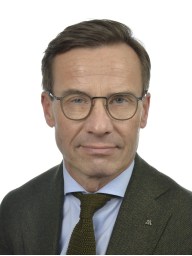 Statsministern Ulf Kristersson (M)
Madam Speaker! The European Council, which we most often call the EU summit, met in Brussels on Thursday and Friday last week. With a very long agenda, we focused primarily on Ukraine, the EU's next long-term budget, competitiveness, including energy and green transition, and migration.
When it comes to Ukraine, President Zelenskyy participated in the meeting again and gave his picture of the situation on the ground. It was a strong reminder of the very serious situation Ukraine continues to be in as we soon enter a fifth war winter, and we see extensive Russian attacks against everything from energy infrastructure to hospitals and schools.
At the same time, Ukraine's access to satellite communication with Starlink has been restricted, and the USA has entered into a poorly-timed diesel deal with Russia for Ukraine and Europe. This is worrying and very regrettable, which the EU summit also expressed.
That is why it is even more important now that the EU does the opposite and increases support for Ukraine and the pressure on Russia, not the other way around. That is why it was good that the EU was able to agree last week on the largest listing package so far, with sanctions against almost 1,600 companies and individuals.
At the same time, it is evident that more countries need to take greater responsibility. We see that the bilateral support to Ukraine is decreasing from several sides following the large joint EU loan to Ukraine and in the wake of poor economies in many EU countries.
A few countries in northern Europe, including obviously Sweden, still account for a disproportionately large part of the total support. In the long run, it is not a sustainable situation, which both I and Germany's Federal Chancellor expressed at the meeting.
I also met with President Zelenskyy in a bilateral, that is, separate, meeting. We discussed then, among other things, the introduction of the Swedish Gripen fighter jet system into the Ukrainian Air Force.
The Swedish government also adopted as recently as last Thursday a new support package to Ukraine of 522 million kronor for the most acute needs ahead of winter, such as energy supply for Ukrainian homes, schools, and hospitals. Do not underestimate either the value of the civil Swedish support ahead of a cold winter.
The second major issue at the meeting was, therefore, the EU's next long-term budget, the one called the MFF. The discussion followed the well-known dividing lines we have seen for a long time. On one side stand Sweden and all those countries that pay in more than they get back in cash. On the other side stand the countries that get back significantly more than what they pay in fees and who now want us, who are already net payers, to pay even more – simplified, in short. Sweden is working on the issue together with primarily Germany, the Netherlands, Denmark, Finland and Austria.
For us, the Irish presidency's new budget proposal was a disappointment. The cuts that were proposed were too small and in the wrong areas. Furthermore, the proposals for various forms of joint borrowing still remained in the proposal.
My answer to their demands was the same words but in different languages: Nej, no, nie, non and nein. These were approximately the languages I managed. This could therefore not be misunderstood at the meeting.
I emphasized that Sweden will never accept a budget that implies that the Swedish EU fee increases by 60 percent and that we cannot have constantly swelling budgets where every new priority requires new money. In the same way that hard-working Swedes do with their household finances, the EU must also be able to prioritize for real among different important expenditures. We respect that this is difficult, just as it is difficult in national budgets, but the priorities must still be made. Sweden and Swedish taxpayers' money is not the EU's ATM. In addition to a substantial reduction of the budget volume, the Swedish discount shall be renewed and continued support for Ukraine guaranteed.
The discussion was at times intense, to put it diplomatically, and it is obvious that we still stand far apart and are far from an agreement. In addition to the size of the budget, the question of new own resources, that is, entirely new sources of income for the EU budget, is also a clear example of significant disagreement.
It will now be the task of the President of the European Council, António Costa, to move the negotiations forward with a new proposal and try to stitch together an agreement by the turn of the year. For Sweden, however, a good agreement is more important than a quick agreement. We have no reason to accept a poor solution just to keep to a specific timetable. The budget, after all, does not apply until 2028.
Madam Speaker! The discussion on competitiveness focused, as expected, on high energy prices and on the EU's emissions trading system ETS. What unfolded at the meeting actually developed into an attack against the ETS system, primarily from Italy, Czechia, Slovakia, and a few others. All the more important was that there were more of us who stood against the attack. It is not climate policy's fault that we have an all-too-great European dependence on fossil energy from rather complicated countries. It is instead precisely the opposite: It is the dependence itself that is the problem.
It is not uncommon that this is about countries that have long been far too dependent on fossil fuels and which therefore now want to dilute the current ETS system but also postpone the introduction of the new ETS, which is often called ETS 2.
On the other side, we stand, once again together with among others Germany, Denmark, Finland and the Netherlands. You hear that it is the same countries time and again. It became at times a fierce discussion where we stood firm against each other to counter the proposals for watering down.
In addition to the fact that the fundamental problem itself concerns an excessively large fossil dependency – first a dependency on Russia and now on the Gulf countries – it is about protecting the companies that are already making and have made large investments in fossil-free energy. Their investments become credible and profitable only if the policy remains firm in all essential aspects.
The result of several hours of discussion was that the EU summit reverted to an old agreed text on ETS from last spring. The conclusion was also that the negotiations on what is called the market stability reserve, which is already in its final stages, shall now be accelerated and that the Commission shall carry out an updated assessment of the various effects of ETS 2.
Overall, Sweden succeeded, together with like-minded countries, in defending the emissions trading system's key role as a tool in Europe's climate policy, but expect that high prices and weak economies will cause the issue to return! It also does not help that the USA is now absent from the green transition and that China is playing and wants to dominate all different types of energy at the same time.
The Swedish lesson from the 60s and 70s thus remains valid. At that time, our electricity system became almost 100 percent fossil-free, first for purely economic reasons and then increasingly for climate reasons and purely security policy reasons. Now, the entire European energy supply should be made independent of international conflicts.
Within the framework of the competitiveness discussion, we also followed up on the discussion from the summit in June regarding macroeconomic imbalances and the EU's trade relations with China. The Commission President Ursula von der Leyen spoke about the ongoing dialogue with China and the work to review the EU's various trade instruments.
The subsequent discussion on this point was completely undramatic. The common perception we had last time remained. The EU is far from a level playing field in trade with China and therefore needs the right tools in trade policy, preparedness, and ultimately a will to act.
Now the Commission will continue to review how the EU's trade policy instruments can be used and developed to adapt trade policy to the global reality that our countries and our European companies face. A trading nation like Sweden has every reason to follow that work closely and provide support.
Madam Speaker! The meeting concluded with a discussion on migration, which was framed by this summer's events in the Spanish enclave of Ceuta. Even though great progress has been made in the migration area in recent years, more needs to be done. For me, it is quite obvious: We need to jointly protect the EU's external border, ensure a more effective return of those who are to leave Europe, and counter the cynical exploitation of migrants as a tool for the political purposes of other states. We did not make any major decisions this time, but the issue is likely to return to the European Council's agenda in the coming months.
The other items on the agenda were rattled through relatively quickly, and I therefore do not intend to go into them right now. When it comes to the Middle East, there was actually no discussion at all this time.
With this, Madam Speaker, I conclude the report from the meeting.
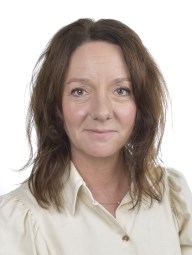 Matilda Ernkrans (S)
Madam Speaker! I thank the Prime Minister for the account of what we have understood to be, to say the least, a heated EU summit.
I will concentrate my remarks on the parts that have to do with Swedish security and green technology development, even though everything has an impact on the EU's long-term budget.
I will start with Ukraine. The EU summit took place in a serious security policy situation. Russia's war of aggression continues while the Trump administration acts in a way that favors Russia and weakens Ukraine. It is at least worrying to see that Trump time and again chooses Putin.
This makes Europe's cohesion in the support for Ukraine absolutely crucial, but we cannot take it for granted. In several European countries, forces are growing that want to weaken the support for Ukraine. If Marine Le Pen were to win the French presidential election next year, the conditions for Europe's security policy could change fundamentally.
Sweden needs to contribute to a stronger and more independent Europe that can withstand authoritarian forces and that can take responsibility for its own security. Ultimately, it is not just about Ukraine's freedom but also about Sweden's security, not least considering our geographical proximity to Russia.
How did the Prime Minister act at the summit to secure long-term and sustainable European support for Ukraine? It needs to be able to endure even if the political will falters in some of the EU's largest member states. What measures does the Prime Minister intend to take in the future?
Statsministern Ulf Kristersson (M)
Madam Speaker! I share the view that we have had very solid support in Europe for a long time – perhaps more than many thought when the war broke out – but that we must not take it for granted. It is quite obvious. I also share the view that the war's duration, weak economies, and political division in a number of countries are cause for concern.
We continued to be extremely clear on this point together with many good friends in the European Council. A discussion arose based on the previous opt-out that Hungary used when we had the large EU loan. A discussion emerged, initiated by Slovakia, about whether one could perhaps do it that way again. We, Germany and others were extremely clear that is not how we work, but it is collective support for Ukraine that applies. If countries want to threaten with using their veto, they can say it in plain language. It is collective support that applies.
Furthermore, everyone is doing different amounts bilaterally. That is where I am most concerned right now, as a number of countries are using the joint loan and support to Ukraine as a pretext to reduce their bilateral support. We certainly cannot force France to make different French decisions, but we are very systematic in our work to encourage, urge, and even demand that other countries also do their part, not least on the civilian side now ahead of the winter.
That this is difficult is quite obvious. I am afraid that the longer time passes and the more Russian successes we see in a pressured Ukraine, the more countries will fall for the fear propaganda that Russia is now conducting with its hybrid warfare in many different countries. The steadier we in Sweden stand together – all eight parties – the stronger the Swedish voice is.
Matilda Ernkrans (S)
Madam Speaker! Thank you for the answer, Prime Minister!
Strong European cohesion is crucial, not only for Ukraine's and Sweden's security but actually also for Europe's economic future. That brings us to another issue, which concerns European competitiveness and the development of green technology. This is also a part of building Sweden stronger.
A strong emissions trading system is a crucial prerequisite for Swedish jobs and investments. It became clear that there are several member states that are now working intensively to lower the ambitions regarding EU's emissions trading. This would be devastating for Swedish industry and our competitiveness, but also for European competitiveness. We must stick to and accelerate the green transition.
I want to ask in the same way: What steps are the Prime Minister and the Swedish government now taking, following the heated EU summit, to secure and strengthen the Swedish positions regarding green technology development? The Prime Minister has received instructions from the Riksdag to work even more intensively on this.
Statsministern Ulf Kristersson (M)
Madam Speaker! It became obvious that a number of countries are now under severe pressure from high energy prices. We all think this is painful ahead of this winter, and we do not yet know what is to come, but that Italy is more pressured than others is obvious. It is also the most fossil-dependent country. Not least the gas sets the price on their electricity. That they are now pressured in such a way that they want to lay the blame for this on the emissions trading system became completely obvious.
Ursula von der Leyen demonstrated with clarity that one cannot blame the emissions trading system for this. That is not the basis, but rather it is a too slow transition from fossil fuels over a long period that is the root cause of this. Then there are certainly many domestic political reasons in countries that are also approaching elections.
Our major contribution was to set our feet on the ground and simply say no. We refused to accept the attack against ETS that they were for and instead sent it back to the review of ETS 1 that has already been decided.
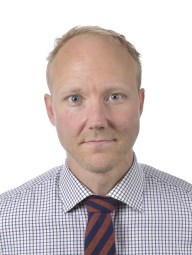 Ludvig Aspling (SD)
Madam Speaker! If one is to believe the media, there seems to have been an interesting discussion in the area of migration as well.
What I find a bit interesting in this is that neither the new crisis framework that has been proposed nor the pact is adapted for the situation we have today, namely that a large member state actively opposes regulated immigration as an idea.
In January, Spain decided to grant residence permits to up to 1 million illegal migrants. In July, the country's supreme court decided that all migrants arriving by sea, even without a boat, shall be allowed to stay and seek asylum. The day after, around 30,000 people showed up to do so.
It is obvious that the Sánchez government has a goal to increase migration to Europe as much as possible. The plan for how they are going to do this here is also quite clear. If Spain lets in and then sends on enough migrants, the pact's rules on so-called responsibility compensations will become applicable. What this means in practice is that we will become responsible for migrants that Spain lets in. In other words, it is somewhat misleading to claim that Spain is subject to migration blackmail, unless one assumes that Morocco has somehow succeeded in taking control over Spain's legislators and supreme court. Closer to the truth is probably to claim that it is Spain that is using migration as a weapon against us.
For me, it is a bit strange that the council expresses such strong support for Spain, when they themselves are responsible to such a great extent for the situation that has arisen. They have completely deficient regulatory frameworks and deficient border surveillance. It seems that very little is working there. At the same time, the criticism of Spain is completely absent from the conclusions.
Can the Prime Minister inform me? What is actually happening, and how does he himself view this? Would he have wanted to see a slightly clearer wording towards Spain in the conclusions?
Statsministern Ulf Kristersson (M)
Madam Speaker! As everyone in here knows, but perhaps not everyone watching on television knows, all decisions we make in the European Council are unanimous. That is simply how decisions can be made. It means that where there are strong differences of opinion, there are either no conclusions at all or rather watered-down conclusions. It is no secret. This applies here as it does in all other areas.
It is also no secret that there was a rather heated discussion, not least between Spain and Italy, which could not land on any conclusions because the disagreement was simply too great. But it was still meaningful to have an exchange. What actually happened in the exclave? How did Spain actually act? There were quite a few details there that are not in the conclusions, and so it almost has to be.
The discussion will, of course, return. The fundamental problem is that we have a common external border, but each part of the external border is managed by an individual country, which is responsible for its part. But it is the EU's common external border. We also have open borders within the entire Schengen area, which is a large part of the EU, which makes this an obvious conflict issue. It is nothing new, but it becomes highlighted when a number of such things happen. Furthermore, it becomes highlighted when different countries, for domestic political reasons, have different views on the migration issue – Spain and Italy, to take a well-known example. Then we will not get any further here. One gets further in other ministerial councils, where majority decisions can be made.
One should not underestimate the consensus that, despite everything, also existed at my level in the European Council regarding countering instrumentalization, this complicated word for other countries wanting to use migrants to create geopolitical problems. We have seen that in many places, not least in our own vicinity – the border between Finland and Russia, for example. There is consensus there, and overall, the consensus is much greater today than just a few years ago. One must therefore see the glass as half full, not half empty.
Ludvig Aspling (SD)
Madam Speaker! I thank you very much for the answer and can confirm that I also see the glass as half full. The tone in the conclusions on the migration point is completely different today compared to when I started working in the Riksdag ten years ago and how it has sounded over the years, so it is clear that it has moved in the right direction, from my point of view.
I still think the conclusions are a bit strange considering that it is exactly as the Prime Minister says: It is a consensus decision. Everyone must agree, otherwise there will be no point on a certain issue. Okay, but that means that all countries have agreed to express their support for Spain without simultaneously demanding that a letter of criticism against Spain be included.
Politico has received a copy of a draft. This is therefore media information, so I cannot guarantee that it is correct, but according to them, it was a draft that never became reality where it stated that the commission would also investigate a mechanism for consultation on national measures that affect other member states. It is an extremely soft and non-confrontational wording. Why was that wording not included? It does not even point out Spain, but it is general in direction and extremely kind.
Statsministern Ulf Kristersson (M)
Madam Speaker! The technical answer is that it was not possible to reach a consensus. It was certainly one of many drafts that pass all the way through to the European Council meeting. In the end, it becomes what everyone can agree on in the face of the threat of otherwise having no conclusions at all. But, as said, this will guaranteed come back.
Let me just remind you that Sweden is now part of a very broad group, now a majority of all EU member states, that meet and discuss precisely migration issues. It was in this forum that we, for example, raised the entire issue of that conventions should be changed so that one can deport even refugees who commit serious crimes. It would never have happened if Sweden, Denmark, the Netherlands and other countries had not been involved in this work. So, things are ongoing all the time, but it rarely goes fast in the European Council.
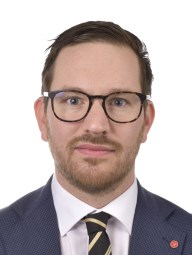 Håkan Svenneling (V)
Madam Speaker! Yes, it was a large agenda that the Prime Minister and the European Council went through last week.
The Prime Minister mentioned that Ukraine's president Volodymyr Zelenskyy was visiting. At the same time as he participated in the European Council, tensions increased sharply towards the USA and specifically Donald Trump. Many argue that this was the first time that Zelenskyy seriously spoke his mind and said what he actually thinks about Donald Trump.
I wonder how the Prime Minister perceived the support for Zelenskyy in the European Council and if we can expect any shift in position, for example when it comes to the frozen Russian assets, which should be shared with Ukraine.
At the same time, we see how the settler violence on the West Bank is escalating increasingly. During the past week, an American journalist, a French mayor, and several diplomats have been attacked and assaulted – and of course thousands of Palestinians, but that does not reach the media's spotlight when they are attacked during this year's olive harvest. The radicalization in the settler movement is becoming all clearer, and the right-wing extremist minister Itamar Ben-Gvir is now demanding to become defense minister in the next right-wing extremist government under Netanyahu.
The council's conclusions warn companies against bidding on construction projects in the settlement area E1. But what happens if companies do it anyway?
Great Britain has now come out and clearly stated that it will introduce sanctions against individuals and companies that bid to build settlement E1 in violation of international law. Great Britain has also introduced a ban on settlement products and measures against those who finance and support illegal settlements.
It was not a major discussion, the Prime Minister said. I simply wonder if there is still a momentum to push through the proposal that France and Sweden have put forward regarding sanctions against Israeli ministers and if it is possible to get sanctions against those who participate in the expansion of the so-called E1 area.
Statsministern Ulf Kristersson (M)
Madam Speaker! Fundamentally, the support for President Zelenskyy and Ukraine is monumentally strong. That is the most important thing, one might say, and it remains monumentally strong. As I said at the beginning, I do however think that there are recurring areas of concern both purely economically and sometimes also by people saying: "Now we want peace." Then I usually say that we certainly want peace, but not on Russian terms.
So there is such a concern. I also perceive that President Zelenskyy is walking a difficult balancing act when it comes to the USA. Ukraine is, on one hand, very dependent on intelligence and satellite communication, and on the other hand, constantly questioned. I believe everyone understands Zelenskyy's balancing act. No one envies him for it.
It is also a sign of why Europe would need to have more of its own capacities and not be so dependent on, in this case, American intelligence and American communication for Ukraine. It is a memento to all European countries, but such things are not solved exactly in one winter.
The frozen assets were up again, in the sense that Belgium with significant clarity clarified that nothing has changed regarding the decision made last time, based on their conditions for releasing the frozen assets.
We may think it would be reasonable to use these assets when there is a shortage of money in other places, but Belgium will not change its position on that point. There are some more informal discussions regarding whether solutions can still be found that somehow accommodate Belgium. Let these discussions continue for a while longer! Principally, we obviously think that the frozen Russian assets should be used.
When it comes to the Middle East, there was no discussion, and it was absolutely not due to a lack of interest. I sometimes say here in the chamber that not all issues can be discussed in detail every time. This time it was only about the conclusions and nothing else.
Håkan Svenneling (V)
Madam Speaker! I asked on Wednesday about the so-called blocking statute to protect the International Criminal Court, ICC, from US sanctions. Then the Prime Minister said that Sweden stands ready to use the so-called blocking, but it is not very clearly visible in the Council's conclusions. That is something I noted.
I also want to comment on the budget process. I have been involved a few times now when the EU's budgets have been drawn up. It surprises me every time that the conclusion always becomes that even more money is needed – a huge amount more. I think the entire EU's budget process in that way is fundamentally flawed.
One reason for this is that the Council President António Costa, who is now being given the power to perhaps submit a new proposal, comes from a Commission that has already submitted a proposal for a sky-high increase. Will the Commission really start to adopt a budget-restrictive stance all of a sudden? Is there not a great risk that we will continue to receive these enormous additions that we, as net payers, will have to continue to pay?
Statsministern Ulf Kristersson (M)
Madam Speaker! The member's questions are very reasonable. The honest answer is that we in here can have different opinions on the content of a Swedish budget, but the Swedish budget process works. We all know that what one wants to spend, one must also bring in. It does not work that way in the EU, where there is always a hope that someone else will pay – preferably the countries that have long been net contributors to the EU's budget. The incentives for frugality from the others are quite small.
Simply put, everyone wants to maintain the cohesion policy, i.e., the regional policy, and maintain all support for agriculture. They also want to do a lot of new things and preferably secure their own tax revenues. They also want to borrow extra money for a number of different reasons. One reason is that they themselves do not have money, which applies to France.
Others want this because they realize that the more the budget swells, the more they themselves will get in the end. We have opposite incentives. This is a tug-of-war, but as we said, we will not give in when it comes to this.
When it comes to whether António Costa will succeed, he knows that the only chance of getting a budget through is that we who are restrictive become sufficiently satisfied to even be able to consider a compromise. We are not there yet.
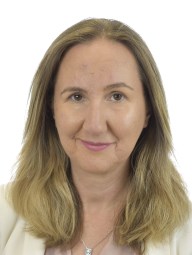 Anna Lasses (C)
Madam Speaker! I would first like to extend a big thank you to the Prime Minister when it comes to Sweden standing up for the emissions trading system and the so-called ETS. It worries me to hear the Prime Minister speak about the fact that the others actually want to cut back on this, because it is so incredibly important for both the climate, the companies, and not least the competitiveness. Now it is a matter of continuing to stand one's ground, and then we shall see what the continuation looks like.
Ukraine can be seen as the major topic at this meeting, and it is also Sweden's absolutely most important foreign policy issue. What is said about "no, there will be no peace on Russian terms" is simply because there will be no peace then. At best, it will become a bit calmer for a while, but everyone sitting in here knows that this will continue in one way or another – either directed towards Ukraine or towards all of Europe and all of the West.
It is truly important to stand up and hold out regarding this. Now we are facing a dark, cold winter in Ukraine. It really matters to push forward with all available means. The Prime Minister has already commented that the frozen Russian assets were taken up and that it is still completely locked regarding these. I hope that this will eventually be resolved.
I have a question about the bilateral support, that is, the countries' own support to Ukraine. What do the other countries say when it is brought up that this is a collective responsibility and that we all must help each other?
When it comes to Russian influence in elections, polarization, and the risk that the right-wing forces benefit from Russia's attempts to exert influence, I wonder how the other states reason regarding these issues.
Statsministern Ulf Kristersson (M)
Madam Speaker! Anna Lasses is asking very important questions.
I would first like to thank the member for the thanks regarding the climate policy. We have not seen the end yet, but we are in good company, not least industrially. Our companies expect that we stand up for the decisions they have made regarding long-term green transition. This applies to many other countries as well.
When it comes to the question of how other countries think, there are somewhat different views. One thing concerns geography. If a country is located far from Russia, Russia and the war in Ukraine are not present every day in the way we consider obvious. It is simply a matter of stating this. In that case, one thinks that other geographies are more interesting: What is happening in the Mediterranean? What is happening in North Africa?
Geography, therefore, matters. That is what we have learned regarding the Baltic Sea and the Nordic-Baltic region. I think one should keep that in mind. Given that, our cohesion over the last five years is impressive.
Another thing concerns weak economies. If you have a debt of 120 percent in relation to GDP and constant budget deficits, every billion to Ukraine is a billion that you cannot spend on anything that even your own citizens notice immediately. It is trivial to say it, but it requires a sufficiently good economy to also be able to afford the solidarity that we consider self-evident. There, those things stand against each other.
A third point concerns political division. Here in Sweden, eight out of eight parties are solidly united in their support for Ukraine. In many countries, it does not look like that, but more or less strong parties openly question it or feel that other priorities are more important in any case. It is also constant elections in countries all the time.
I am not saying this as an excuse, but to explain that different countries view the matter differently. Therefore, the combination of common EU efforts that everyone can unite behind and bilateral support where one has special capabilities – military capabilities, for example – is crucial.
We have managed this for five years. We must manage it for a while longer.
Anna Lasses (C)
Madam Speaker! I thank the Prime Minister very much for the answers.
A weak economy should rather mean that one thinks long-term, and in this case, long-termism de facto means standing up for Ukraine.
A question where the Prime Minister and I may not be as much in agreement is, naturally, migration. We agree as far as it is important that the EU's border functions – that is what I mean. The question, however, is how to do this in the best way, and I would like to take this opportunity to highlight the role of aid.
We talk very much about returns and about the smuggling of migrants, and on that issue, I absolutely agree. Aid, however, also has an immensely important part in helping and ensuring that people are doing well where they are and do not need to flee to Europe due to, among other things, climate change, diseases, war and conflicts.
I want to ask: Did these questions even come up in connection with the migration discussion?
Statsministern Ulf Kristersson (M)
Madam Speaker! First, just a few words about Russia before I address migration. We spoke quite detailed about different examples of hybrid warfare. Bulgaria's Prime Minister gave a detailed description of what is happening in the Black Sea, for example. They have not yet attributed this to anyone, but I dare to interpret their suspicions quite far. We also spoke about what has happened in Leipzig, Estonia, and Romania. Many countries are experiencing roughly the same thing. Most do not let themselves be intimidated, but the purpose is to make the population really uneasy.
Regarding migration, we were not involved in that so much. There is a broad respect in the EU system that different countries have different views on this. It is, in essence, national decisions and national migration policy. There is an awareness that the common external border must be defended and that a no in one country should be a no in all countries so that no one is encouraged to move within the union, for example.
Aid is also a strictly national matter and something we choose to use somewhat differently. My view is that several countries use what is called a whole-of-government approach to this.
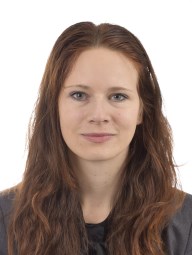 Rebecka Le Moine (MP)
Madam Speaker! Thank you to the Prime Minister for the report and the account!
I intend to begin by, on our behalf, expressing support regarding the EU's emissions trading system. As many have pointed out, including the Prime Minister himself, climate work and high climate ambitions go well together with work for competitiveness. I hope that we can see the same commitment also in other climate-related parts moving forward.
I also want to express strong support and praise regarding the commitment and the work for Ukraine. It is important that we continue to be persistent in that matter.
Now I will move on to the questions I asked before the summit. They concern the long-term budget.
Madam Speaker! The EU's summer was characterized by fires and extreme drought. In the proposal currently before us, the Council chooses to cut back on climate work but also on preparedness and the funds used to fight fires, to make interventions where needed during, among other things, floods and to take urgent measures in the shadow of the climate crisis.
I am aware of the government's and the Prime Minister's position. The Green Party agrees that Sweden should be restrained and belong to the frugal group. But as the Prime Minister has pointed out, it is also about priorities. One chooses here to cut back on parts that will become increasingly important.
My question is how the Prime Minister drives the issues regarding priorities in the long-term budget concerning climate investments, climate adaptation, environment and nature – and also regarding democracy and aid, which there are also proposals to reduce.
Statsministern Ulf Kristersson (M)
Madam Speaker! I think the Swedish line is very understandable and clear. We want a smaller budget, which leads to a smaller Swedish fee. Everyone can understand that. Within that framework, I want a more modern budget that places more focus on our time's great common challenges and less focus on what was common a few decades ago. That means in plain terms less European regional policy and more modern agricultural policy. All of this is difficult.
We were not meddling in individual matters. If Sweden were to do as everyone else does and monitor individual pieces of the pie, the budget would become very large. Everyone is constantly doing so that they monitor just the piece of the pie they themselves think is most important, but we must agree on a total volume and a direction before we can fight for individual matters.
I fundamentally agree that our time's problems concern security, competitiveness, climate issues, and crisis management issues. We want to see more work on such problems – not less. But it is unfortunately easier to cut back on what is new than to cut back on what is old and that many have grown accustomed to getting a lot of money back for.
It is going to be a long night – perhaps even the night of the long knives. I think it is worth underlining that when we say we are not in a hurry, we do not do so to obstruct, but to say that we do not feel forced to be finished by the first of January. There is a whole year left until the budget is to begin to apply. Those who are in a hurry are those who will lose this budget battle.
Rebecka Le Moine (MP)
Madam Speaker! I would then, in all good intentions, like to give a tip for savings. It concerns the fossil subsidies that exist in the EU's long-term budget and which are to a very large extent present in the common agricultural policy. There, savings of approximately 400 billion SEK per year can be made, according to WWF's report.
We think that in the work with a modern budget, one must also think long-term, even regarding aid and democracy. There is a fund called AgoraEU, which is incredibly important for strengthening the processes and tools the EU has to have a resilient democracy, but where cuts are now being proposed. How did Sweden and the Prime Minister act on the proposal to cut AgoraEU?
Statsministern Ulf Kristersson (M)
Madam Speaker! I believe I mentioned that we were not entering into any single budget item, because that does not work. It would have been to accept the proposal that is on the table as a starting point for the discussion. That is not what we want – because we think it is far too much – and neither is it what those who think it is far too little want. It gives a hint of how far apart the countries stand.
I might still want to say for the sake of the minutes that Sweden and Swedish farmers derive economic benefit from the European agricultural subsidies. That must not be forgotten. One may have views on whether it is fundamentally a good way to transfer money between countries, but we also benefit from this. We Swedes, therefore, will also have interests to guard eventually in the budget process.
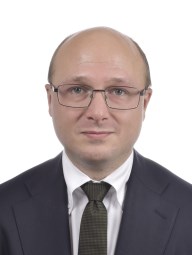 Erik Ottoson (M)
Madam Speaker! It is undeniably in a messy world that the EU's heads of state and government meet this time as well. It has not become any less messy since last time, nor has it become any less difficult to understand.
If this had been a film you watched ten years ago, you would probably have left the cinema with a slight feeling that it was exciting but not particularly realistic. But here we stand. The EU has to put its foot down in a very difficult situation, not least in relation to Ukraine but also to the great powers in the world, who have great influence over our European security and trade.
The US president has concluded a diesel deal with Russia during this very sensitive period. The Starlink connection for the Ukrainian military forces fluctuates, one might say, and appears to some extent to be limited. At the same time, there are suspicions that the American military is withholding intelligence information, which costs Ukrainian lives. Therefore, the big question is: How is the EU going to stand its ground in relation to the USA in this very difficult time? Does the Prime Minister want to elaborate on how the reasoning proceeded in this regard? How does Europe act in relation to the USA to give Ukraine the support it deserves and needs at this very sensitive moment?
Statsministern Ulf Kristersson (M)
Madam Speaker! I will begin with the latter question. It is quite obvious that the EU countries, individually and collectively, have done very much to compensate for the long-announced reduction in American support. We have replaced almost 100 percent of the reduction in American support in the form of money and defense materiel, sometimes by purchasing American materiel and donating it to Ukraine. Now, it is rather the availability that is a problem. The European defense industry is too small, and much of what Ukraine needs most is only available to be purchased from the USA. We have done that.
The USA is unique in its support when it comes to a number of things, for example intelligence and satellite communication, and in that, Europe currently has no alternative to offer. The long-term conclusion is, of course, that we in Europe must make ourselves less vulnerable.
I think one should say that it is not good as it is. One should, however, not forget the following: None of the problems we are now discussing – Russia, USA, China, migration, climate and so on – could Sweden have met better on its own. Think of that too, and do not now make the best the good's enemy. Let us look at the United Kingdom and Brexit. Nothing has become better in the United Kingdom after Brexit. Everything was not perfect before Brexit, but alone one cannot manage these kinds of really big problems.
We have high expectations and are disappointed when things do not proceed at the pace we had hoped for or when everyone cannot agree on our specific priorities. That is simply how it is. We probably just have to accept that the conditions for international cooperation are such. The stronger our voice is together with others, the more we can push things in the right direction.
We in Sweden would not have stood stronger if we had stood alone in the face of all the problems that the world presents to us.
Erik Ottoson (M)
Madam Speaker! The Prime Minister and I are in complete agreement on this. When we look at the challenges that Sweden faces, it becomes very clear that a small country like Sweden would have been significantly weaker if it had had the same policy as during the Cold War.
This leads me to my follow-up question. Is there ongoing strategic work to expand European capabilities and make Europe more independent in relation to others?
The Prime Minister mentioned Brexit. It has not been many days since the British Prime Minister began airing thoughts on perhaps considering stepping back into the European Union. Were any conversations held at the council meeting or around there regarding how one can best initiate and possibly also facilitate such a process? As the Prime Minister says, a united Europe is many times better than a divided Europe, and the United Kingdom is an important part of that whole.
Statsministern Ulf Kristersson (M)
Madam Speaker! Common European capabilities are constantly on the agenda, always in relation to Nato. It is a bit complicated. Some countries absolutely do not want to do things that are too close to Nato, because they are in the position Sweden was in previously. Others think, on the contrary, that one should not double up by adding things that Nato already does.
When it comes to the defense – that is, the instrumentalization – of the external border, defense industry cooperation, as well as cyber and space issues, which are also becoming increasingly important from a security perspective, the EU has a chance to take large steps forward because Nato is not doing that much right now. I believe there are clear synergies between Nato and the EU that we should be proactive about. This applies in particular to the defense industry, where everyone is looking at Sweden right now.
I also note what Erik Ottoson mentioned regarding the United Kingdom. This will become an interesting battle in British politics eventually. We would welcome them back, but one should not underestimate the complications when it comes to a re-entry agreement with the EU.
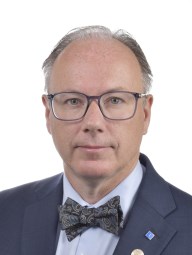 Magnus Berntsson (KD)
Madam Speaker! I thank the Prime Minister for the report and the answers that have been given to previous questions.
It was a solid agenda with many points. I understand that some points were discussed more than others and that Ukraine was naturally one of them.
Here in Sweden, we have been able to make many decisions regarding Ukraine and take completely unanimous decisions on civilian support. This support applies in particular to energy infrastructure, which is very important and will be extremely important during the winter we have ahead of us. We have also made unanimous decisions on military support. The Prime Minister mentioned the Gripen, and it is very nice that we have been able to do this in unity.
Humanitarian aid has also come from Sweden. We see a very great commitment from the civil society side.
I say this because I want to thank the Prime Minister. It is one thing to discuss such matters in this chamber, where we agree, but there is not always consensus in the European context. Therefore, the work the Prime Minister has done in raising these issues is extremely important.
I hope that the unanimous support from the Swedish side has been helpful in these discussions and that it will also be helpful in the discussions on the long-term budget. We are relatively in agreement on these issues from the Swedish side. We think it is important that one first reviews their own management and looks at how to reprioritize.
We think it is important to ensure that we have a competitiveness that allows us to compete in the areas where there are great opportunities. We think it is important to manage to make the simplifications that are needed and to be able to move forward with free trade. It is also important to continue to defend ETS 2, which is the most effective carbon-reducing program in the whole world.
Statsministern Ulf Kristersson (M)
Madam Speaker! I can mostly confirm all these things. That is how we work – step by step we move forward.
I think a lesson from the last four years is how incredibly important it is to constantly work closely with like-minded people. This can be difficult sometimes, but like-minded people are different on different issues. One has to be quite unconventional. You have certain friends on certain issues, and then you go in wholeheartedly there. Then you can be on the opposite side on other issues, and then you accept that. It is a matter of constantly looking for like-minded people and opportunities to achieve as much joint influence as possible.
This is what we often do from the side of the Nordic and Baltic states. The northern nine, as we call ourselves, meet before each meeting.
In some cases, it may involve more ad hoc combinations. It could be together with Italy and Denmark when it comes to migration, together with Germany, the Netherlands and Finland when it comes to competitiveness and together with Finland when it comes to forestry. One has to constantly look for different things. I do not think Sweden has always been best at that.
I think that during these years we have systematically learned to stay ahead of the curve, to discuss carefully before a council meeting – it is too late to come up with something once you are already sitting at the council meeting – and to inform other countries about opportunities to join forces and influence the result. All of this has become better, but I really want to emphasize that it is far from perfect.
Magnus Berntsson (KD)
Madam Speaker! I thank the Prime Minister for the answer and for the work.
I understand that some geopolitical issues, for example those concerning the Middle East, perhaps were not discussed in such detail. I said at the previous meeting that it is important that when we talk about Iran, we do not just talk about whether the oil manages to pass through the Strait of Hormuz, but actually talk about what is happening in Iran, where people continue to be executed. We really must not take our eyes off what is happening.
I understood, from what the Prime Minister mentioned, that China was discussed. Can the Prime Minister elaborate on something regarding this? We must not move from a position of dependency towards Russia regarding oil and gas to another kind of dependency towards China. We see how they behave towards Europe right now, but we also see what is happening at the Chinese universities and so on.
Statsministern Ulf Kristersson (M)
Madam Speaker! First, I would like to say a few words about the Middle East and address a sign of the times. I would have traveled to Riyadh in a few days. Representatives for the EU and the Gulf meet once every two years. This is a region that is important for many reasons, but the meeting is now cancelled. This says something about what consequences such things have even in the more political world.
When it comes to China, one can, somewhat simplified, say the following about the old contradiction: On one side stood we, the free trade supporters – typically Sweden and Germany. We saw, on good grounds, always the value of free trade. Free trade sharpens competition. Our companies get large markets. We have 150 years of experience of that. On the other side stood those who wanted to protect the home markets. We distrusted them, and they distrusted us.
Now there is an emerging consensus. Free trade and international competition are good, but it must occur on reasonable and fair terms. That is where we now draw the line.
 Louise Minnhagen (L)
Madam Speaker! Thank you, Prime Minister, for the account so far!
Today is International Air Traffic Controller Day, and I am an air traffic controller. I would therefore like to take the opportunity to ask a question about exactly that today. It concerns drones. The question was discussed last week but may have been one of the points that possibly rattled through. But I still want to take the opportunity to highlight the issue on just this day.
The threats to Europe's security are not only about traditional military attacks. We know that. Drones can also affect critical societal functions in peacetime. Drone technology is developing rapidly and creates great opportunities for companies, emergency services, and other socially beneficial activities. At the same time, it can be used for surveillance, interference, and sabotage. The protection of critical infrastructure must therefore be developed in step with the threat landscape.
For civil aviation, the issue is particularly complicated. An unauthorized drone in the vicinity of an airport can lead to the fact that air traffic must either be restricted or, in the worst case, stopped. At the same time, the measures taken against the drone must be able to be carried out without creating new risks for air traffic, people on the ground, or other socially important systems. It therefore requires both the ability to detect and identify threats and a clear distribution of responsibility between the actors involved, such as civil authorities, police, and defense.
Since the threats do not stop at national borders, European coordination was also needed. The EU Commission has developed an action plan for drone and anti-drone security. I know, as I said, that you discussed it last week and that the European Council meeting called for further efforts to protect critical infrastructure.
My question is therefore: Did the meeting discuss how you will ensure that civil aviation safety is taken into account?
Statsministern Ulf Kristersson (M)
Madam Speaker! I want to first say that air traffic controllers are incredibly important. I am not an air traffic controller, but I constantly benefit from the work of skilled air traffic controllers. I truly appreciate that. This reminds me that I have long been thinking that I should ask to be allowed to climb up into the air traffic control tower at Arlanda and see how it works from that vantage point as well. It is truly a very important job.
It is quite true that we discussed these matters, but perhaps not in such detail. But in a previous question, I spoke about where the line is drawn between the EU's and NATO's security work. Drone defense is a typical such issue. Sometimes it is a purely military capability, which we in Sweden develop and have lent out, among other places to Copenhagen. We have received an informal request to lend things to Bulgaria, to protect their coast at the Black Sea, for example.
But there are also many more civilian applications, which are not Nato but could be common European, if one wants to build up such a capability – incredibly important! As mentioned here, it concerns everything from purely electronically jamming, taking down and taking over drones, all the way to, at most, purely physically also shooting down drones – with respect for all the security problems that arise when one does such things. All of this is complex.
This is a question that we discuss in some detail within the framework of what constitutes the EU's common security policy work that complements but does not compete with NATO's work. An interesting such discussion is ongoing.
Not least, eyes are turned towards Sweden, because we have quite significant such capabilities, which appropriately also protected an EU summit in Copenhagen when the Kastrup airport specifically was extra poorly exposed.
I am taking these things with me. And I will call the control tower and ask to come for a visit.
Louise Minnhagen (L)
Madam Speaker and Prime Minister! I have also received an answer to my follow-up question.
I welcome the Prime Minister to a study visit.
 Bassem Nasr (MP)
Madam Speaker! For decades, Israel has committed abuses against the Palestinian people. It concerns collective punishments and that they imprison children, even in military courts without the rights that one normally sees in a democracy and in a legal process. This has also been reported many times by Israeli human rights organizations.
The EU's numerous condemnations of Israel's abuses have obviously not been heeded but rather ignored. If the EU seriously wants to stop these abuses, further condemnations are not enough. One must put force behind the words. The EU must use sharper tools. This is a conclusion and an analysis also made by large parts of the peace movement, both in Sweden and internationally, such as Svenska Freds, Amnesty International, Diakonia and many others.
I am therefore very disappointed when I read the minutes from the European Council where I see yet another row of condemnations but no concrete steps to put pressure on Israel.
Statsministern Ulf Kristersson (M)
Madam Speaker! As I said, consensus is the very prerequisite for decisions in the European Council. Sometimes we are powerfully united and can go very far. Sometimes we are powerfully disagreed, and then we either have no conclusions at all or conclusions that everyone can eventually live with but that no one is satisfied with.
I have said many times in this chamber that when it comes to the Middle East, the disagreements are relatively large in Europe, for many different reasons, even though I think we have increased the consensus a bit in recent years. But we did not get any further than the conclusions we have right now. And as I said, it was not a point of discussion this time either, but we settled for the conclusions we could agree on.
I can almost guarantee that the issue will come back at upcoming European councils.
Bassem Nasr (MP)
Madam Speaker! I would have understood the Prime Minister's answer if it had been the case that the government had pushed forward throughout the entire mandate period but encountered obstacles in the EU. But what we have seen is that the government has not done enough with the tools that it owns itself. One example of this is when the Foreign Minister shook hands with his Israeli counterpart. If Benjamin Netanyahu had set foot in Sweden, he would have been arrested by the Swedish police. That our Foreign Minister then shakes hands with his Foreign Minister, I would say, is a stain on Swedish foreign policy.
We also abstained in the UN when the vote on a ceasefire took place. And we have withdrawn the support to UNRWA, who are those who are best suited to save Palestinian lives. I know that support has been given to other organizations, but no organization can provide the same help as UNRWA. These are tools that the government itself owns. There I think we have more to do.
Statsministern Ulf Kristersson (M)
Madam Speaker! I may have to be a bit precise here: That there are also in Sweden different views on the conflicts in the Middle East and the views on Israel and Palestine is quite obvious. However, the Swedish disagreement is not discussed at EU summits. There is probably plenty of such disagreement in almost every other country.
Now we are discussing what we can agree on collectively regarding a number of things, and they are no small things we agree on. We agree on the absolute necessity of a two-state solution. We agree on the condemnation of Hamas. We agree on the access requirements, and we also agree on the criticism of Israel's actions. Further than that, however, we will not go in Europe right now.
 Gurgin Bakircioglu (MP)
Madam Speaker! The European Council's conclusions from October 16 emphasize the importance of strengthening the EU's resilience and reducing strategic dependencies. However, there is also a democratic dimension to economic dependencies. We have seen examples of Members of the European Parliament receiving recurring financial support from private donors whose identities are not disclosed, citing security reasons.
Was the risk of improper economic influence on the EU's institutions discussed during the summit? Does the Prime Minister believe that the EU's current transparency rules provide sufficient oversight and independent control of such economic contributions?
Statsministern Ulf Kristersson (M)
Madam Speaker! The concrete answer is that we did not discuss that question. Had we done so, I would have included it in my reporting.
However, it is well known that just those kinds of things are discussed repeatedly, especially in the EU Parliament. We have seen several quite spectacular police interventions where people and members of parliament have been suspected of various things. The President of the EU Parliament, Roberta Metsola, has on several occasions, even at meetings of the European Council, described the processes the EU Parliament has to deal with those kinds of corruption, abuse, or misconduct. My impression is therefore that it is taken very seriously. But the European Council, i.e., the heads of government, do not discuss that matter.
Source: The Swedish Parliament. The speeches come from the open data of the Riksdag, translated into English by AI, which may contain errors.
Portraits: Photo: The Swedish Parliament. (opens in a new tab)