Debate on the occasion of the submission of the budget bill
The whole debate at riksdagen.se, in Swedish (opens in a new tab)
Translated from Swedish by AI; the translation may contain errors. The Swedish text is the original.
Speakers
Sweden budget bill: M, V, and S debate economic future AI
The debate concerned the submission of the budget bill and Sweden's economic future. M argues that Sweden has a strong economy with high growth and low public debt 1, and wants to continue promoting companies and strengthening property rights 2. M emphasizes the importance of broad alliances 3 and argues that electricity production is crucial 4. V is willing to join the government 5 and wants a liberal economic policy that strengthens the work line 6. S argues that the government has caused high unemployment and underfunded welfare 7. SD considers that Sweden has good conditions 8 but demands budget discipline and an independent economic policy 8. MP wants to invest in the green transition 9. KD wants to increase the child allowance 10 and speed up agency processes 10. C wants a turning point for unemployment and emissions 11.
Written by AI in advance and may contain errors. The numbers lead to the speech a statement builds on; check against the text below.
Speakers (21)
- Finansministern Elisabeth Svantesson (M)
- Edward Riedl (M)
- Ida Gabrielsson (V)
- Edward Riedl (M)
- Ida Gabrielsson (V)
- Edward Riedl (M)
- Åsa Lindhagen (MP)
- Edward Riedl (M)
- Åsa Lindhagen (MP)
- Edward Riedl (M)
- Eva Lindh (S)
- Henrik Vinge (SD)
- Ida Gabrielsson (V)
- Henrik Vinge (SD)
- Ida Gabrielsson (V)
- Henrik Vinge (SD)
- Ida Gabrielsson (V)
- Martin Ådahl (C)
- Hans Eklind (KD)
- Åsa Lindhagen (MP)
- Pär Gustafsson (L)
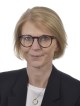 Finansministern Elisabeth Svantesson (M)
Madam Speaker! 60 days have passed since the Swedish people went to the polls. Since there is no new government in place, it is my job today to submit the budget bill, which is a transitional budget, to the Swedish Parliament.
It is not a common budget. It is certainly extensive and concerns as many appropriations as before, but there is no new policy and no new reforms in it, because this must wait until a new government is in place. Regardless of the color and form of the next government, it is therefore its right to handle it.
Madam Speaker! Even though Sweden does not have a new government in place, this budget is presented in a situation with very strong public finances. We have a strong recovery in the Swedish economy, we have higher growth than in a long time, and we have falling unemployment and low public debt. The recession is also now releasing its grip on the Swedish economy.
Madam Speaker! In the forecast for this budget, the recovery ahead is expected to be driven by more new jobs emerging, by employment rising, and by the number of hours worked in the economy increasing. The strong recovery we have seen so far has instead primarily been productivity-driven. With all this said, things are heading in the right direction for the Swedish economy, and it is of course important that that development continues.
Madam Speaker! Even though we are now in a protracted government formation, the world out there is ongoing, both outside the walls of the Riksdag and outside Sweden's borders. I was at the IMF and World Bank annual meetings just a few weeks ago, and then I was reminded of how fragile the global situation and the world economy are.
On the one hand, one could think that the world economy has shown a rather surprising resilience despite everything that has happened in recent years. For example, growth in many places has been higher than expected, and it is driven by, among other things, AI investments, even though we do not know exactly how these will strike. On the other hand, the clouds of worry are also many and quite large, Madam Speaker. It is everything from cyber threats and war to energy prices that are starting to soar again as winter is at the door.
My greatest concern, Madam Speaker, is the global public debt, which is increasing and is now close to 100 percent of global GDP. When debts increase, interest costs also rise. If one adds up the countries' interest costs, one sees that they are collectively the highest ever, and to that, one can add that many of the AI investments are financed with private loans. There are therefore reasons to be concerned and at the same time be alert, because this can truly be described as a perfect storm.
In the midst of all this is Sweden, which has a framework that we agree on together and which has stable public finances. We do not have the same reason to worry about our economy, but we need to continue to build it strong and make it grow and ensure that the framework and the balance target are maintained.
Now I have handed over the budget for next year. I did not know until today that it had received a light gray cover. It matches the sky outside, but there are no other similarities. It is a budget that will make it possible for Sweden to function next year.
I just want to say something about how we have approached this when we made this budget. It has only happened in that way once before, and that was in 2018. It has been very useful for us at the Ministry of Finance that such work has already been done. It was Finance Minister Magdalena Andersson with several others who did it in 2018, when it was tested for the very first time. We have taken advantage of those experiences.
In common language with all eight parties in the Riksdag, we have been able to produce a proposition so that the country can function. I want to say a big thank you to everyone for the constructive process, where we agreed on a main principle and the exceptions that shall apply – just one such thing! I can say, Madam Speaker, that it is not all parliaments in Europe that would be able to agree on that in these times, but we know how to put Sweden first.
What is it that applies then? Perhaps someone here in the chamber or someone watching this wonders what the difference is between a transition budget and a regular budget. In a regular budget, you have political reforms, and you might increase or decrease certain initiatives. The main principle here is the following: The appropriations and the levels of appropriations that apply this year, 2026, shall also apply in 2027.
Then there are some exceptions that are important. It can, for example, be about ensuring that the a-kassa continues to receive the funds needed if unemployment changes in some way. There are also other important agency functions. Some of you have surely heard of PLO, which is not only a political organization but also an enumeration of various state expenditures.
You may think that this is complicated or that I am complicated, but what I am trying to say is that we must ensure that our authorities have the resources they need to be able to continue their work.
Another exception is if a decision has been made on a law that applies and more resources are required for, for example, stricter penalties or the expansion of prisons. The exceptions we have in this budget apply to, for example, the Prison and Probation Service but also infrastructure projects. In those cases, the Riksdag has decided on a framework for several years ahead.
Another exception is defense, which is important for several reasons. These are long contracts, and it is quite natural that we continue our build-up as it is a socially important function. It also sends an important signal to Putin and others who want to divide and rule that we in Sweden collectively take responsibility for the continued defense build-up, even though we do not have a new government in place.
Finally, Madam Speaker: As I said, this is no ordinary or ideal budget. There are many parties here who would have wanted to include or remove different parts of it. Now the Riksdag must take on the budget bill. As I said already in 2018: The financial power lies here. Now I hand over the budget with a warm hand so that the Finance Committee and others concerned can take on it. Now I have done my job, and now you must take over.
In this speech, Dennis Alvdén, John E. Weinerhall, Gustaf Göthberg, Marie-Louise Hänel Sandström, Joanna Lewerentz, Olle Olson, Johanna Rantsi, Amanda Thonander and Susanne Wahlström (all M) agreed.
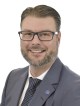 Edward Riedl (M)
Madam Speaker! When the Moderate-led government took office a little over four years ago, we took over a Sweden that had become both more dangerous and poorer. 10 percent inflation and high mortgage interest rates pressured many households. We had low economic growth in Sweden. The shootings and bombings were completely out of control.
Over the last four years, we Moderates, together with our coalition partners, have ensured that Sweden has been able to become both wealthier and safer. Inflation has been fought and interest rates have become lower. The economic growth belongs again to the top of Europe. We have lowered the tax on wages, pensions, and savings. We have lowered the tax on electricity, fuel, and food.
We did all this so that ordinary people all over our country would have it a bit easier and have slightly larger margins in their wallets. Ordinary families with children should be able to afford food and winter clothes for their children.
We made significant investments in more police officers and better legislation. We also succeeded in reducing fatal gun violence by 80 percent.
We have made Sweden safer through a historic buildup of the Swedish defense. We have supported Ukraine in broad political unity. NATO membership means that Sweden is now building security together with its allies.
Madam Speaker! Sweden is a fantastic country. We have great opportunities, and we have much to be proud of and rejoice in. We have high growth, the EU's lowest inflation, and a very low public debt. Sweden is a well-managed country with great opportunities to meet what lies ahead of us and with order and discipline in the public finances.
Regardless of which government eventually takes office, there are good chances of meeting what comes with a strong economy behind it. One can solve both problems that have not yet been solved and new problems that will arise. All of this we can do, so that people in our country can live good lives.
Madam Speaker! The Moderates sought the voters' trust during the election campaign with the aim of making Sweden richer and safer. Work shall pay off, and crime shall be punished in the simplest form. Those who strive with work and education shall be able to live a good life in Sweden. Two salaries shall be enough to be able to buy, for example, a house. One shall also be able to have a touch of luxury in life.
Those who have worked a whole life should have a pension that they can live on. The pension should not only suffice for the necessary but for more than that. If it is so that one wants to travel or have other pleasures, the pension should suffice for that. We are living longer and healthier lives, and then there must be financial room in the autumn of life.
We have now seriously pushed back crime, but much work remains to be done. We must nurture the reforms that have made this development possible. We also want to implement political reforms that lead to increased economic growth and more jobs. That allows us to finance the welfare and ensures that more money can stay in the pockets of ordinary people.
Madam Speaker! Much work needs to be done during the coming four years so that even more people can have it even better in our country. We need to implement a policy for more and growing companies. Not least, small businesses are important for Swedish growth. We need to strengthen the ownership rights for all the country's forest owners and make continued regulatory simplifications within many sectors.
We need to strengthen Swedish agriculture so that we can get more Swedish food on the plate. We have made reductions in the tax on diesel for agriculture and forestry. These are important reforms for Swedish farmers. The Center Party has now submitted a proposal in the Committee on Finance, and hopefully, this can continue even next year. As someone who has been involved for a while, I can say that the Center Party and the Moderates agreed on this during the pandemic. Even after Russia's invasion, we agreed on reduced tax on diesel for agriculture. It was actually I and Martin Ådahl, who represents the Center today, who sat in that negotiation. If one wants to, it is possible to do very much.
Madam Speaker! We in the Moderaterna will during this mandate period continue the work of making Sweden richer, safer and more secure. That will be guiding for us.
In this speech, Dennis Alvdén, John E. Weinerhall, Gustaf Göthberg, Marie-Louise Hänel Sandström, Olle Olson and Mats Sander (all M) agreed.
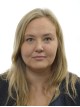 Ida Gabrielsson (V)
Madam Speaker! I want to start by thanking Finance Minister Elisabeth Svantesson – even though it is not customary in a reply to another speaker – for the process she has maintained. The proposal for the transition budget has been developed entirely in accordance with current principles, we experience, and all parties have been informed in a good way throughout.
To my question to the member! In light of the budget and all the things that member Edward Riedl highlights as successes for the Tidö government, I wonder if the member believes that Ulf Kristersson and Elisabeth Svantesson will want to govern during the mandate period with a budget that implies a real turn to the left.
The mathematics remains, even if the Center Party has formed its own process where one, so to speak, wants the bids. Either we, the red-green original parties, win if we join forces in the budget vote against the Tidö parties that include the Center Party, and then you can govern with a left-wing reform agenda. Or you must cooperate on the budget with those who have pointed out the one government option that is current now, namely the Sverigedemokraterna and Jimmie Åkesson.
The question is: How are you going to get the budget through the Riksdag going forward if you are going to continue this policy of lowered taxes and the investments that you prioritize?
Edward Riedl (M)
Madam Speaker! I begin by saying thank you in return to Ida Gabrielsson for the constructive work regarding the transition budget.
With the risk of speaking for both Ulf Kristersson and Elisabeth Svantesson, who are sitting just a few meters behind me – I have not spoken with them – I can venture to say that neither of them wants a leftward turn in Swedish politics. That much I can at least say. Regardless of whether they will hold current ministerial posts or be in opposition, there is no such desire from our side.
Madam Speaker! The answer to Ida Gabrielsson's question is that negotiations are currently underway. I cannot say very much about them, as there are no stated parliamentary strategies from either side on how this should be done.
Whichever government takes office, I believe one needs to have a good will for cooperation with all parties in the chamber. It will be guiding. During the pandemic, we Moderates also reached an agreement with Vänsterpartiet regarding more money for elderly care. As I said earlier, we reached an agreement with Centerpartiet regarding reduced tax on agricultural diesel when Russia invaded Ukraine and it resulted in much higher costs for Swedish farmers. During the last parliamentary term, when we had a Moderate-led government, eight out of eight parties in the chamber reached an agreement on defense.
Regardless of which government it becomes and how it is formed, one needs to be able to cooperate broadly. What will be guiding for us Moderates is, as I said earlier, that we want to build Sweden richer and safer but also more secure. I have tried to explain what it is we want to do. That is probably the answer to the question.
Ida Gabrielsson (V)
Madam Speaker! I agree on how important these broad agreements are. I myself am part of the Pensions Group and the defense agreement for Vänsterpartiet, which I think you are handling very well. Furthermore, we have the energy agreement, which then didn't quite happen in the end. It is very important with agreements in those types of issues.
At the same time, it is clear that if Kristersson's government does not secure support from the Sweden Democrats, we three red-greens will want to push through our policies. It has happened before, when the other side, so to speak, succeeded instead of our side, which had let our Prime Minister through.
My question remains nevertheless given the statements that have been given by Magdalena Andersson. I perceive that it would be the same way if it had been about the Moderaterna instead; one does not, therefore, intend to be each other's support party. In that case, there are only the Sverigedemokraterna or Vänsterpartiet that one can either govern with or cooperate on the budget with.
Edward Riedl (M)
Madam Speaker! Once again: When it comes to the defense agreement and much else, we have sat in negotiations together on everything from frameworks to the defense agreement. I believe it must be guiding, regardless of which government we have, that in important issues, one tries to build broad alliances in the chamber, especially when it concerns incredibly important issues for Sweden.
Sometimes there will also be political dividing lines between right and left regarding views on taxes, entrepreneurship, economic growth, and so on. There, my hope is, of course, that we from the Moderates succeed in finding broad majorities for our political direction, and I understand that it also applies conversely for Ida Gabrielsson's party, which wants to find conditions for the equivalent. The future will well show which of us will leave the chamber most happily when it comes to just these pieces.
 Åsa Lindhagen (MP)
Madam Speaker! I also want to start by thanking the Minister for Finance. It is nice to see her in the chamber again, and I thank her for the account of the principles that she gave.
Madam Speaker! I want to move into the substantive issues regarding questions where we may have had a bit less consensus. I thought it was nice to listen to the exchange of remarks here regarding the questions where we jointly take responsibility for Sweden's best.
It specifically concerns the climate reporting in the transition budget, where it is stated that Sweden will not reach our climate goal by 2045. The gap is a full 11 billion tons, which is an enormous figure. This applies even if Sweden utilizes complementary measures to the maximum extent, for example climate investments abroad. In that case, we still have this gap.
The forecast has also worsened since 2025. One of the explanations is, which has also been raised, the stalled electrification of transport and work machinery.
When it comes to Sweden's commitment towards the EU and how much we are to reduce emissions by 2030, we will not manage this either.
Madam Speaker! I would like to ask my fellow member how he views the development of Sweden's climate work.
Edward Riedl (M)
Madam Speaker! Thank you, Åsa Lindhagen and Miljöpartiet, for constructive work regarding the transition budget and other matters!
We have had many debates of this type over the last four years. To be very clear from the Moderaternas side: For us, it is incredibly important that we reduce emissions and that we achieve a long-term reduction in carbon emissions both in Sweden and in the rest of the world.
Let me just remind everyone listening that Sweden has the lowest climate emissions in the entire European Union. Sometimes it sounds in this chamber as if Sweden is the villain in Europe. That is not the case, rather we have the lowest emissions in the EU. With that said, I think we should do very much more to be able to lead the way.
I do not believe, however – and it is regarding this, Madam Speaker, that we often have political debates – that Sweden shows the way through bad politics, which rather deters other countries from following our examples. A clear such example is the reduction obligation, where we made Swedish fuel the most expensive in the world. This had the consequence that other countries looked at Sweden and thought: We do not want to do that!
I and we believe that electrification, however, will provide many of the answers on how to reduce carbon emissions. In that case, we need to build back more electricity production in Sweden so that we do not get these bottlenecks with power shortages for the electrification. Then we will be able to transition both industry and transport towards more electric cars, work machines, and so on. But then we need more electricity production to meet the power demand.
I do not think the goals differ, because we also want to get rid of carbon emissions. But we believe it is better to do it in this way. Some of the proposals that Miljöpartiet has pushed, Madam Speaker, have been very expensive, and they have not led to such large environmental and climate improvements as was talked about from the beginning.
Åsa Lindhagen (MP)
Madam Speaker! We have pursued a climate policy that has made Sweden an example in the world, but that is no longer the case. Sweden is lagging significantly behind in the climate ranking.
Emissions have increased. It is binary; one either increases or decreases emissions. We may disagree on the way forward, but we should stand united on the fact that an effective policy reduces and does not increase emissions.
It is a fact that electrification has stalled. In my role as the Environment and Climate Commissioner in the City of Stockholm over the past four years, I have met a number of companies that are very uncertain about the rules of the game moving forward. They do not know how to steer their businesses when they see that it wavers so much when it comes to electrification. It is about, for example, the abolished electric car bonus overnight; it is such things that shatter the conditions for the companies.
How does the Member of Parliament view the fact that electrification has stalled when neighboring countries like Norway now largely only sell electric cars?
Edward Riedl (M)
Madam Speaker! Let us establish several things. It is a matter of doing the right things to truly reduce emissions. From our side, we believe that electrification is the answer, and we then need to have more electricity production in the form of stable base load that manages to ensure that we do not have problems with high electricity prices. In our system, it is about that rather than about electricity shortages. This stands in the way. That is the first thing.
Pleasantly enough, more and more electric cars are also being sold in Sweden, despite all this. When it comes to Norway, it is at extreme costs that one has the electric car bonus. If one wants to spend so much money on subsidizing car purchases for people who are quite well off, one can of course do so, but we believe that there are better ways to use the money.
We are making agreements on many things; I just want to say that. Even in the transition budget, we are eight parties, Madam Speaker, who in broad agreement provide industrial support to save this type of industrial production in Sweden.
 Eva Lindh (S)
Madam Speaker! I also want to begin by thanking the Minister for Finance and the Government for the dialogue on the principles for this year's budget bill.
We Social Democrats agree with the government on the principles that underlie the budget. It is good that the government has anchored them broadly with the parties in the Riksdag, and it is a strength for Sweden that we have broad agreement between the parties on the rules of the game for the budget.
The budget bill that the government presents today is a transitional budget – an administrative budget that contains no new political content. The purpose of a transitional budget is to handle urgent and ongoing government matters as well as to ensure that the state functions while waiting for a new government. But today's budget bill also represents an excellent opportunity to evaluate Ulf Kristersson's four years in power.
Madam Speaker! It has been four lost years for Sweden. Unemployment is sky-high, almost half a million people lack work and 100,000 more have become unemployed since the government took office.
At the same time as unemployment has increased in Sweden, it has decreased in other EU countries. If Sweden had followed the same development as the eurozone, almost 100,000 more would have had a job to go to. This would naturally not only have made a difference for the individuals who are unemployed today, but it would also have made a big difference for the Swedish economy.
We can observe that the Kristersson government's time has been characterized by the fact that the Swedish economy has consistently underperformed and that growth has been lower than its potential. This means a GDP development that is worse than the trend and, as a consequence of this, lower tax revenues and less money for the treasury.
People all over Sweden have had it tougher in everyday life. Food has become more expensive, real wages have not recovered after ten years of real wage increases have been erased, and household purchasing power has been eroded. While most others in Sweden are having a tough time, the government and the Sverigedemokraterna have consistently chosen during the mandate period to still prioritize targeted tax cuts for those with the very highest incomes. Ulf Kristersson and Jimmie Åkesson have given themselves 6,000 kronor more in reduced tax every month. This is an obvious misprioritization. This money could have been used to invest in reducing unemployment, increasing growth, and strengthening welfare.
Madam Speaker! The pursued economic policy has brought very tough times for the welfare system. With the results in hand, we can state that the government and the Sverigedemokraterna have created a crisis in Swedish healthcare. At the beginning of the mandate period, it was clear that the situation in Swedish healthcare would deteriorate if the government did not take responsibility. Ahead of 2024, Sweden's regions warned that the situation would become even worse. But the government and Sverigedemokraterna ignored the warning signs and chose to prioritize targeted tax cuts for high-income earners instead. In the mandate period's final budget, they even chose to reduce the funding for women's healthcare by 600 million.
The consequences of the government's policy are felt in the everyday lives of the Swedish people. To give an example: During the year, staff within maternity care in the Moderate-led Region Skåne alerted how cuts affected the operations and newly delivered mothers. These are unworthy consequences of the government's economic policy.
Madam Speaker! The Government and the Sweden Democrats have chosen to prioritize tax cuts for those who earn the most. This has had consequences for both the welfare system and for the Swedish people. At the same time as they could afford to lower taxes, they never could afford to increase the child allowance, even though all our Nordic neighboring countries did so during the cost crisis. They could not afford to make it cheaper for our elderly to pick up medicine; instead, it became more expensive. On the other hand, the Government and the Sweden Democrats consistently could afford to lower taxes for those who already have the most.
This is ultimately about respect for ordinary people all over Sweden who build and have built our country, respect for our common welfare, and enough respect to prioritize investments for the entire Swedish people over tax cuts for those with the very highest incomes.
Madam Speaker! During the current parliamentary term, Sweden has run larger and larger deficits and borrowed hundreds of billions. In total, the government has borrowed almost 200,000 kronor per minute during its four years – every minute, every hour, every day, every year. In February this year, the Finance Minister also stated that the money for new reforms was exhausted. It is a departure from the responsible budget policy that has served Sweden – all of us – well, and the bill is left to the Swedish people. If the state borrows more, the interest payments become more expensive. This means that more tax money goes to interest payments and less to welfare. It means fewer teachers, nursing assistants, and police officers. In the long run, it could mean that the costs for ordinary people's mortgages are pushed up.
This is unfortunately not any unusual development when the Moderates are in power. Every time the Moderates have been involved in governing Sweden since the introduction of the unicameral parliament – or since the year I was born – they have left behind large deficits in the public finances. We Social Democrats have at every occasion stood ready to take responsibility for the Swedish economy. That is what we are doing now as well.
Madam Speaker! It has truly been four lost years for Sweden and the Swedish people. When the final accounts are now written, the parliamentary term can be simply summarized: Sweden has become poorer. Unemployment has increased, welfare has been underfunded, and the government has incurred large deficits. High-income earners have been the big winners of the parliamentary term, while welfare and families with children have been the big losers. It is, therefore, not a set table that this government leaves behind.
Madam Speaker! Work is currently underway to provide Sweden with a new government. The past four years demonstrate the importance of a new economic policy. It is about Sweden being at the forefront of technological development, that ordinary wage earners shall receive real wage increases, and that more companies shall be able to be created, grow, and hire. It is when the economy grows faster that we get increased resources for welfare and more people get a job to go to.
But that requires Sweden to change direction. We Social Democrats want to see an economic policy that prioritizes welfare throughout the country, which is egalitarian, which boosts growth and lowers unemployment, which makes the whole country live and which gives ordinary people more money in their pockets.
 Henrik Vinge (SD)
Madam Speaker! To immediately after a stinging election defeat pull oneself together and produce a comprehensive and complicated transition budget is to take great responsibility in a situation where many others do not. I wish to join the crowd that directs a thank you to the Minister for Finance and her staff for the work they have done. The sense of duty that they have demonstrated in this process deserves the Riksdag's respect.
Madam Speaker! The Swedish economy is currently strengthening. Growth is high, but the risks in the world around us are also significant. Trade barriers limit the opportunities for Swedish companies and affect investments. The war in the Middle East and disruptions in the energy supply are driving up costs and appear to be affecting inflationary pressure.
Sweden simultaneously has relatively many other countries with good conditions to counter and meet all of this. We have strong public finances, competitive companies, a well-educated population, and an economy that is gaining momentum again. We also have a well-functioning fiscal framework and a broad awareness in the chamber of the risks of fueling inflation. Not least the developments in France show what uncontrolled budget deficits can lead to: growing debts, higher interest expenses, and limited political room for maneuver. Swedish budget discipline gives us better conditions to complete important investments and to meet pressing needs also in an uncertain global situation.
The serious security policy situation is also counted among the global risks. Russia's attack on Ukraine clearly shows why Europe must be able to take responsibility for its own security. Sweden's defense buildup must also continue while the formation of the government is underway. The security policy situation currently leaves no room for delay or hesitation. Therefore, we naturally welcome the broad consensus that exists regarding continuing to strengthen the Swedish defense.
The expansion of the Prison and Probation Service is also accommodated in the transition budget. This is because the Riksdag has previously made decisions leading to more perpetrators of serious crimes being sentenced to prison. In that case, we must also ensure that the sentences can be carried out.
Important infrastructure investments must continue. That is good. It strengthens the conditions for long-term sustainable growth and ensures that we can avoid costly interruptions in ongoing investments.
But the transition budget also leaves a great deal of pressing needs unanswered. There, the Riksdag may need to take responsibility and supplement the transition budget by restoring some tracks from last autumn's budget bill.
Madam Speaker! Historically, there have been some strange notions about what a Sweden Democrat influence could mean. Now, with the results in hand, we know that the reality turned out to be different. The Tidö cooperation showed that major problems in our country that had long been presented as insoluble could actually be addressed.
Serious crime was pushed back. The care queues decreased significantly. The tax on fuel was lowered by more than 10 kronor per liter. Sweden went from rather gloomy times when the mandate period began to record-high growth when it ended.
Much remained to be done in this project, of course, but the development had clearly started moving in the right direction. Now, important parts of that work risk coming to a standstill or even being rolled back when the formation of the government drags on.
In the transition budget, for example, nearly 3 billion kronor are missing which were earmarked for the continued expansion of the police during the next year. If this were to happen, it will have consequences for crime fighting and safety in our country and jeopardize some of the progress that was made during the previous mandate period.
For cancer care, the appropriations are being reduced by 1 billion at the turn of the year. We must restore that billion so that the work with shorter waiting times and better cancer care can continue.
The tax on fuels is being raised significantly. For those who need the car, the costs will become higher again. Many Swedish families will, in that case, have a harder time.
The formation of the government requires difficult trade-offs. But we also have a responsibility to ensure that necessary decisions are made in time and that what has been built up is not lost while the negotiations are ongoing.
The Sweden Democrats are not part of any intended government constellation. We are in opposition. Our door is, however, open for those who wish to negotiate to restore these and other important initiatives in the state budget.
Madam Speaker! We are now designing an independent economic policy. We are doing so with our eyes fixed forward and with the experiences from the Tidö year behind us.
Our welfare ambitions are high. The dental care reform shows the direction: care based on need, regardless of the size of the wallet. The care queues must continue to be shortened, psychiatry needs powerful reinforcements, and care and welfare must be available for everyone, regardless of where in the country one lives.
When people live with serious chronic diseases, not all responsibility can be shifted onto the relatives. The state also has a responsibility.
Sweden shall be a safe country where people can shape their own lives. After a long professional life, one should also be able to age in security and with dignity.
To carry out these ambitions, we must ensure that the economy grows faster over time. Long-term high growth is absolutely crucial. More people must be able to support themselves through work. Subsidy-based employment cannot be the solution. We must make it cheaper to hire, introduce real apprenticeship positions, and build attractive vocational educations in close cooperation with the labor market.
Higher education must meet the needs of the labor market to a much greater extent than today. A longer working life also requires opportunities to further educate oneself and change careers.
Small businesses must be given reasonable costs, simpler rules and conditions to grow. Reliable energy supply and functioning infrastructure provide better conditions for companies to invest in Sweden.
Our country must also be attractive for international experts. Labor immigration shall provide the competence we need, not press down Swedish wages, bypass Swedish working conditions, or raise the thresholds for Swedish unemployed.
The same long-term responsibility shall characterize all our priorities: a responsible immigration policy with requirements for language, adaptation, and self-sufficiency, a justice system that puts the crime victims in focus and powerfully combats serious crime, as well as reasonable taxes on fuels and other things one needs so that everyday life functions regardless of who you are and where in the country you live.
In conclusion, Madam Speaker: The election did not end as we wanted. My party's influence looks set to be smaller this mandate period than the last. It is, of course, a great disappointment for us. We would have liked to achieve much more.
However, we intend to use these years well. We intend to learn, develop our policy and build a stronger foundation, with greater experience and even greater determination. We will also take advantage of the opportunities that arise to lead Sweden in the right direction: towards safety on streets and squares, towards a growing economy and towards a welfare that people can rely on. Our door is open to everyone who wants to do it together with us.
In this speech, Emil Eneblad, Mikael Eskilandersson, Gunilla Gomér and Eric Westroth (all SD) concurred.
Ida Gabrielsson (V)
Madam Speaker! I thank the member for the speech. It was interesting to listen to how the Sweden Democrats think regarding budget issues moving forward.
What one wonders is whether the Sweden Democrats will now become the Riksdag's new doormat. Since I myself have such experiences, I can say that it is not a pleasant position.
It was the Sweden Democrats and Jimmie Åkesson, as I understand it, who took the initiative and proposed the four-party government that is to be formed. As Henrik Vinge said, one had previously lost the election. I therefore assume that this is a way to maximize one's influence when one has nothing to lose.
The direct question to investigate this doormat suspicion, which some seem to hope for and others fear, is whether the Sverigedemokraterna will let Vänsterpartiet and Miljöpartiet win budget votes in the chamber on increased petrol taxes and other increased taxes on earners and on hiring, or whether the Sverigedemokraterna will use their power to influence a budget for precisely that government constellation they themselves have proposed and wanted to see take office.
Henrik Vinge (SD)
Madam Speaker! I thank you for the question.
Let me begin by stating a few things. The Tidö parties did not receive a majority in the election. It is, of course, a great disappointment for us. We would have liked to continue leading Sweden in a direction towards increased security, a better economy, and lower costs for ordinary people – all of which we had worked on for four years and had made good progress on. But we did not get a majority for that.
This has caused us to reflect on how we shall position ourselves ahead of the upcoming parliamentary term. We have observed that, in practice, there is no realistic government alternative that we can join. The message we gave to the voters before the election was that we would either join a government or go into opposition. Since there is no realistic government alternative, only the role of opposition remains. That is where we will be.
At the same time, we say that our door is open for those who want to discuss the way forward for Sweden in different ways. This can, for example, concern economic policy, but also in many other areas, a government may have a need to anchor its policy with a large party in the Riksdag. That door will be open with us. How we will make use of that, and to what extent negotiations will take place, is difficult for me to answer today.
We do not want to close any doors, and we do not want to contribute to drawing any red lines. I do not exclude cooperation with any party in the Swedish Riksdag. Should it be the case that Ida Gabrielsson and her party are interested in discussing an issue, the door is also open for them. In the political environment we operate in right now, perhaps it is that some party has that attitude, in contrast to many others, can be positive for moving the country forward.
Ida Gabrielsson (V)
Madam Speaker! I thank the member for their thoughts. It is that opportunity that exists for the Sweden Democrats to have influence. If we who said that we won the election had succeeded in forming a government, it would have been difficult. I understand that.
One tip is that if you want to be in full opposition, you do not tolerate the Prime Minister in one direction. In that case, you have still taken on what you imagine to be cooperation.
The question is why one did not choose to tolerate Magdalena Andersson if it were a matter of an open door and cooperation in all directions.
Henrik Vinge (SD)
Madam Speaker! I interpret it as that I have received a question as to why the Sweden Democrats do not support a left-wing government.
There are several reasons. Not least, the parties on the left have clearly declared that they are not interested in taking advantage of the open door at Sverigedemokraterna. It remains open for those parties as well.
We hope that the red lines will one day be gone in all directions. The day they are, we are of course ready. But it is a fact that several parties in the red-green government constellation have clearly declared that they do not want to discuss with the Sverigedemokraterna. I hope that those opportunities will arise, perhaps even during this mandate period. It would be good for Sweden if we could have more cooperation and fewer closed doors.
Ida Gabrielsson (V)
Madam Speaker! It is certainly good that we have a responsible Finance Minister who has submitted a transition budget. At the same time, I would have wished that we four parties who declared ourselves the winners of the election had succeeded in forming a government, led by Magdalena Andersson with a Social Democratic Finance Minister who today could have presented our joint budget proposal. Then we could have started delivering together on what we have promised the voters.
We should have done more before the election to get closer to one another, not least for all those who went to the polling stations and especially for those voters who chose to give their support to just us because they wanted to see something other than a Tidöre government.
Of course it would have been difficult to succeed with such a budget compromise. I won't sugarcoat that. But I am convinced that if the will is still there moving forward, we can give and take and move forward with a budget that we can all feel sufficiently satisfied with.
I therefore regret that the process in which Vänsterpartiet has participated between our four parties has concluded. The situation is as it is, and we must of course accept that Centerpartiet has chosen to initiate a different process. Centerpartiet will tomorrow, Friday, receive a total package from its now two candidates for government formation. One can of course be disappointed and feel cheated because Center has, after the election, opened up to abandoning its reddest line, namely not to cooperate with Sverigedemokraterna. But it is their choice to make.
Vänsterpartiet has no role in the process that is currently ongoing, and therefore it is natural that we wait until the Centerpartiet has put its foot down and chosen which prime ministerial candidate the party wants to stand behind. As long as the Centerpartiet has not closed the door to the government that Jimmie Åkesson has pointed out, Vänsterpartiet is not relevant. Or is it?
I can tell Henrik Vinge that all parties in the Riksdag cooperate often. Even the Sverigedemokraterna are part of the Pensions Group. Now the question is who one should govern with, and Vänsterpartiet does not want to govern with Ulf Kristersson, regardless of whether it is with or without Sverigedemokraterna. It has become a non-issue for me. On the other hand, it has been the Centerpartiet's reason for why the party has chosen our side.
The government that Ulf Kristersson is now probing for is a historically weak minority government. The right-wing government has fewer mandates combined than S, V and MP combined. Therefore, such a government is completely dependent on negotiating the entire state budget and a multitude of other major issues with the Sverigedemokraterna. Otherwise, Ulf Kristersson and Elisabeth Thand Ringqvist will have to govern through our red-green budget's mandate period again – that is, on a total leftward turn. I find it hard to believe that either of them will want to do that.
It is obvious that the budget will be dependent on the Sweden Democrats. I do not think that those of us who have participated in the debates previously consider it likely that Elisabeth Svantesson would suddenly accept that all future budgets she presents will fall in the chamber of the Riksdag.
The mathematics cannot be conjured away. The mandate applies, and it does not disappear just because the only possible supporting party, the Sweden Democrats, calls itself the opposition. And, Madam Speaker, doormats do not take initiatives. Nor are they kingmakers who set exact requirements on what a government one might consider supporting should look like.
The day the Centre Party closes the door to a new Tidö government with SD-dependence, the Left Party's door remains open, of course. But the responsibility and the choice to close the door is their own. One cannot decide for other parties. The Left Party stands firm on our common – we thought – prime ministerial candidate, and we will not, as I have said before, let Ulf Kristersson through.
We have gone to the election with Magdalena Andersson as Prime Minister, and we have not gone to the election against other parties but for our own party. And we have received a trust from our voters to manage. We have, after decades as a support party to the Social Democrats, with terms of office with agreements and cooperation with employees at the Government Offices, now decided together in our association that if our mandates are requested this time, we shall join the government.
If we had won the election in 2010, we would have already been in government. It was the same year that the Sverigedemokraterna entered the Riksdag. They are still a bit more of beginners – we would have been in the Riksdag for almost 100 years then.
Vänsterpartiet has not decided that we shall participate in a government. It is important to know because it is not about making it difficult for the Centerpartiet or about making it difficult to form a government. It is a decision we have taken for our own part, and so all other parties must handle the question of ministerial posts and the possibility of representing their own voters themselves.
In the rest of the Nordic countries, Vänsterpartiet has held government power. All around Sweden, we are included in governments and have been for a long time. Vänsterpartiet increased the most in this election. We do not set any requirements for a form of cooperation that limits the influence of parties whose mandates are required. It has actually never occurred to me that my party should dictate conditions for the influence of another party that I am seeking cooperation with.
I hope that the Centre Party can find other issues to prioritize than just that our party should not be given the same opportunity as they themselves. Therefore, we will not be able to say at 17:00 on Friday, or as Elisabeth Thand Ringqvist said, that we have declined and that we have withdrawn our decisions on what we went to the election for.
We realize, of course, that we will not be able to get everything through. We need to make concessions and find ways forward, because it is true that the election result does not give clear signals for a total turn to the left. The Center Party's mandate is also needed for the prime ministerial candidate for whom we four parties went to the election.
Cooperation is not built on humiliation. In good cooperation, everyone gains something from participating. Of course, a party with a bourgeois identity must also be able to recognize itself during and after a mandate period with a four-party government led by Magdalena Andersson. There are things the Left Party can get better at and do better. We are willing to listen to and take into account the views of any future cooperation partners.
If our four parties could manage to lay a budget together, it is clear that we can govern together, for it is regarding the economic policy that the greatest differences exist – not when it comes to the questions of values. On those, we agree. That is why we have chosen each other.
Let me speak plainly: Vänsterpartiet would not have pushed through enormous tax increases in such a budget. It is possible to cooperate with Vänsterpartiet. We have participated in cross-bloc negotiations and reached agreements with all parties in the defense negotiations, in the Pensions Group, and in connection with other settlements. We have disagreed at times, but in most cases, we have found ways forward in those rooms. I would find it difficult to say that we would not be able to manage to find such a compromise, if we met each other respectfully. One needs, of course, to be able to distinguish between the issue and the person, and one needs to realize that not everyone can get exactly what they want; it is not millimeter justice. When one needs other parties' mandates for a settlement, one must show that respect.
In 2018, the Center Party's then party leader Annie Lööf was here in a debate and said that she was happy that Jimmie Åkesson was her opposite in Swedish politics. Then followed the long government formation, which was also mostly about the Left Party's responsibility so that the Center Party, the Social Democrats, and the other January parties could form a government where we were not allowed to be included or have any influence. It was a strange focus, I think.
It is the same thing now. Almost all Center and LO supporters are pleading with Vänsterpartiet so that a government can be formed. I do not think that is right. Then one must also plead with those who actually have the responsibility to choose. If you are on our side, we need to negotiate. But if you have chosen to open the door to Sverigedemokraterna, you are on the other side.
I have great respect for that choice and for the fact that reflection is now needed within the Center Party. I have enormous respect for the fact that, as the only non-socialist party, you have chosen to remain on our side with reference to the issues of values. I am certain that we will be able to find ways forward to also give the Center Party an opportunity to shine in a future government, in their important policy issues – so that the whole country will function, welfare will function, emissions will come down and jobs will increase.
 Martin Ådahl (C)
Madam Speaker! I did not intend to conduct any government negotiations, neither in any TV studio nor in the speaker's chair in the Swedish Riksdag, regarding a transition budget. The only thing I want to say is that now is a moment when everyone who truly wants to take responsibility for Sweden must realize the gravity of the situation and think about everything that is at stake for so many people. These are major issues that Sweden faces regarding the economy, the direction of the country, and actually also the foundations in the form of basic values.
A turning point is needed so that we take unemployment and emissions seriously and our companies can create jobs, take the lead to save our climate and create sustainable growth throughout the entire country. A turning point is also naturally needed regarding how we view our fellow human beings, so that we start from the premise that all fellow human beings are a resource who can contribute to society and who shall be involved in building Sweden regardless of where one comes from. We must never start from the premise that people are failures and a burden just because of their background. We must try to hold Sweden together, not split our country, and focus on that people shall contribute, not drain.
Let me, however, first say a few words about the more technical aspects regarding a transitional budget. I would like to briefly really thank the government for the fact that the transitional budget is just as neutral and non-political as practice usually prescribes. Thus, the transitional budget, if it unfortunately should be needed, is also a transitional solution that can apply until the parties have agreed on a real, negotiated budget. I can also only parenthetically note that the Social Democrats and the Moderates are currently not directly comfortable managing Sweden together during these months. It seems to work surprisingly well, but I realize that it is a transitional solution with a transitional budget and the situation we have now.
As we have said before, we in Centerpartiet will submit our own budget motion to demonstrate our policy until a solution has been found in the negotiations. Centerpartiet will thereafter vote at every step in the way that best contributes to a sustainable policy and a sustainable solution to the government question. We do not rule out voting for a transitional budget in a final vote on the budget in the Riksdag, but we only do this while waiting for a real budget and a government – not as a definitive alternative, of course.
Just because this is a temporary budget, it is important that we, perhaps in contrast to the Finance Minister, emphasize that we are not satisfied with the economic situation. Yes, after many years we have a recovered growth in this country. We had under the previous government many years with a very low growth. We can, however, unfortunately see even in the transition budget's own forecasts that the growth then slows down very sharply.
We still have, above all, the third highest unemployment in the EU, according to Eurostat. It is an unemployment that is increasingly dominated by the long-term unemployed and which reaches new groups, for example, academics. It concerns many people who have not previously been affected, and unemployment therefore continues to hit very many families out there very hard, and they are waiting for a turning point. It also hits the welfare system, via the state treasury. It is many tens of billions that are lost when hundreds of thousands of people stand outside the labor market.
That is why Sweden now needs a new direction – it is about the burden for Sweden's job creators – where small and growing companies get lower taxes to create jobs, lower employer contributions, reduced regulatory burden, and lower costs in other respects.
We need to invest heavily in school, education and further education. Many places in Sweden are growing rapidly. They need – within the industry and often in the countryside – actually more labor – more educated labor.
We see that according to the transition budget we are not reaching the climate goals but continue to move further and further away from them, which is very worrying. I can furthermore say – if anyone has claimed otherwise – that Sweden is not the best in Europe. In Sweden, Sweden is the best, but not in Europe, regarding carbon emissions. We are in fourth or fifth place according to the EU's database. But this is a parenthesis.
We see that the green industry in Sweden, which fundamentally has a fantastic competitive advantage, today cannot contribute fully to lowering our emissions because we have not created a stable Swedish domestic market. And we are far behind in the electrification of the vehicle fleet compared to our neighboring countries.
We must make it possible for our ordinary households to contribute to this home market. They should be able to choose the climate-friendly option even when they have small resources and even when they are dependent on the car in the countryside.
A change of course was needed here. As we in Centerpartiet have said, we will actually bring down any government that lowers Sweden's climate ambitions. We must invest in green industry and green alternatives for ordinary people.
We also see that the welfare is not as strong as it should be around the country. The mortality in treatable diseases remains much higher in the countryside than in our large cities. We have problems with queues, not least for those with mental ill-health who are waiting for help. It is not properly in place around the country, especially not always in the school. At the same time, school results are declining. Purely technically, the resources for the school are actually strengthened in the transition budget, because they are not scaled down in line with smaller classes. But let us take this as a starting point to invest in the school for real.
Sweden's farmers – who have been mentioned in this debate, for which we thank you – and Sweden's green industries, which are so important for our self-sufficiency, are under severe pressure right now as prices for fertilizer and other inputs have skyrocketed. They truly need to compete on the same terms as other producers in Europe. In that regard, we are grateful – I want to say that to all parties in the Riksdag – that the Committee on Finance has backed our committee initiative to extend the maximum reduction of the tax on fuels for green industries for one more year and, furthermore, to invest in a long-term tax reduction and cost reduction for Sweden's farmers by introducing a technology-neutral agricultural deduction that provides long-term and permanent reduced costs and increased competitiveness, and that this should be done promptly. A big thank you to all parties for that! I believe it is a very fine announcement while awaiting a real budget from Sweden's Riksdag.
At the same time, the public finances in this situation are pressured by the many short-term investments that are currently boosting growth and which in some ways stand in the way of long-term solutions. Therefore, we view with concern that the public finances and the fiscal space are so challenging. We need, in fact, to increase resources for defense – we are grateful that all parties stand behind that. We also need to increase resources to Ukraine even more – while we stand here and debate the transition budget, they are fighting with their lives on the line for all of Europe's freedom. Therefore, we must be able to prioritize.
For all of this, a wise centrist policy is needed in Sweden that lifts jobs, companies, schools, and welfare across the entire country and that lowers emissions and reduces mental ill-health. It is a centrist policy that turns the social climate into one where people do not talk about people leaving, but about them contributing. It is the wise, rational centrist policy that many in politics have claimed one cannot get, but which many in Sweden long for.
 Hans Eklind (KD)
Madam Speaker! Sweden faces a period where we not only need but can also build society stronger. Recurring crises and increased political polarization must not result in passivity or, for that matter, a lack of common ambitions for the common good. We Kristdemokrater want to join forces with all good forces to build Sweden strong.
Madam Speaker! I do not intend to comment on the work of producing a government that can take office. I do, however, note that the absence of a new government after the parliamentary election means that we have received a transitional budget on the Riksdag's table that is based on this year's budget levels and where no new political priorities are made. I therefore intended to use my very limited speaking time to point out some things that we Christian Democrats want to see.
Madam Speaker! When the Christian Democrats are involved in the decision-making, ordinary families with children are the winners. With the Christian Democrats in government, we have doubled the number of double days and made the parental leave more flexible, among other things by allowing a part of the parental leave benefit to be transferred to a grandmother or grandfather to take care of the child. Why only a part? It is the parents who know best how the unique life puzzle should be put together, and the child's best interests must always come before equality goals. The work to achieve an even more flexible parental leave is therefore progressing.
We have, in a government position, ensured that income taxes have been lowered. We have lowered fuel costs. We have halved the food VAT. We have introduced a leisure card. We have raised the ceiling for housing allowance, which means that seven out of ten families with children are now compensated for rent increases. But when it comes to the child allowance, that is, the one that is directly intended to compensate for the costs of having a child, the value has decreased as a result of the high inflation. Therefore, we in the Christian Democrats want to increase the child allowance by up to 750 kronor during this mandate period.
Madam Speaker! We Christian Democrats also want to speed up political decisions and agency processes. Even though this government has done quite a lot, there is still room for improvement. We have launched something that we call Oxenstierna 2.0. By that, we mean: Sweden should not be world-leading when it comes to investigations, consultations, and processes. No, we should be world-leading when it comes to prioritizing and executing things. Projects simply must not get stuck in agency processes and appeals that last for years and where there is unclear responsibility and where agencies appeal each other. Everyone – from the farmer, the villa owner, and the small business to the CEO of a listed company – feels this. It is tempo, tempo, tempo that must permeate the coming years.
Madam Speaker! With this limited speaking time, I only intended to mention a few points without justifying them particularly much. We want to continue with performance-based measures to further shorten the healthcare queues. We want to see a senior care billion. We think it is extremely unfortunate that the transition budget causes 1 billion to disappear now from the cancer initiative. It must be restored. We want to review the issue of reduced tax on fuels and electricity. We think it is important that different initiatives can be made. One small thing that would make an enormously large difference for people is if we can introduce a vaccine for the elderly against shingles.
Madam Speaker! We Christian Democrats believe that it is high time that we let go of the idea of the small country just enough, if we are truly to make Sweden both wealthy and strong. Sweden has during this mandate period moved away from the bottom tier when it comes to growth. Our growth is currently twice as high as Germany's and Italy's and four times as high as France's. This is good news for those of us who want to prioritize welfare.
We simply must continue to dare to invest. When it comes to infrastructure, we are now carrying out the largest investment in modern times. It is that type of mentality that must guide us. If we believe in the capability that exists in our country, we can create a very fine future – if we use our forest, our agriculture, our minerals and our world-leading industry.
Madam Speaker! Sweden became rich through industry, innovation, energy, and Swedes who dared to invest. That is what we can and must do again. That was what we Christian Democrats meant when we said during the election campaign: We believe in Sweden.
In this speech, Lili André and Cecilia Engström (both KD) concurred.
Åsa Lindhagen (MP)
Madam Speaker! Sweden faces great challenges that we can only tackle together. During the Tidö government's four years in power, far too much went completely in the wrong direction. Unemployment has increased, the green transition has come to a complete standstill, and more and more Swedes are living in poverty. We cannot have that. That development must be reversed.
Miljöpartiet ran for election on carrying out a just climate transition and building together a Sweden that has been torn apart by increasing inequalities, poverty, growing racism, division and mistrust. We ran for election to build a country that is good for everyone, regardless of where in Sweden you live, where you were born, who you are and how much money you have.
It is a Sweden where no children are forced to grow up in poverty and where more adults have a job to go to. It is a Sweden where school, healthcare, and care are available throughout the entire country and where our common security systems make it possible for everyone to receive the right support and help at the right time, and where we also get a stop to the destructive deportation policy. It is a Sweden that is far from what we have today, but it is a Sweden that is within reach. Now, political will and political workshop are required.
For us, it is clear that the major political projects of the coming years must be to invest in the green transition and welfare. It creates jobs, builds secure societies and gives Sweden the right conditions to tackle the climate crisis. We have received a clear mandate from the voters to reduce both emissions and the gaps between people. We stand ready to put that mandate into action.
Madam Speaker! In the climate report for the budget we are debating today, it is once again established that Sweden is on track to miss all climate goals. During Ulf Kristersson's time as Prime Minister, climate work has in large part been decimated. Over the last four years, Sweden has slipped down ten places in the global climate ranking. This has not happened by itself, as a matter of chance. No, it is a direct consequence of the Tidö parties' policy. At the same time, the situation is acute to say the least. Extreme weather in various forms has become the new normal, and the world is currently heading towards 2.8 degrees of warming.
Sweden fundamentally has all the prerequisites to carry out a just climate transition here at home and demonstrate climate leadership in the world. When the world's leaders now gather in Turkey for COP 31, we need to be a voice to be reckoned with. After four lost years for the climate, we need to bounce back and show that it can be done.
Sweden used to be a country that others listened to in climate work. We showed that we were ready to do the work, walk the talk. In that way, even though we are a small country, we became a relevant player and a strong voice with much influence. We can become that again. We can bring down emissions, we can speed up electrification, and we can make a just transition. It is possible.
Madam Speaker! The transitional budget that the Minister for Finance has today placed on the table of the Riksdag is a foundation for us to build upon. We will do this by presenting proposals as soon as possible that kickstart the green transition, strengthen welfare, lower unemployment, and build our country back together.
The Swedish people have voted for a new direction, and there is a new majority in the Swedish Riksdag. In a restless world characterized by crises and conflicts, Sweden has everything to gain from having a stable government that commands a majority in the Riksdag. It is important to strengthen our own country, to strengthen our resilience and security, to secure long-term support for Ukraine, and to be a country that others in the world can count on.
Miljöpartiet has since election day acted so that a decisive government can be in place as soon as possible. We will continue to do that. We will continue to act for a new government, and we will act for the climate, the environment, welfare, and all people's equal value.
 Pär Gustafsson (L)
Madam Speaker! For the second time in Sweden's modern parliamentary history, we stand here in the Riksdag to deal with a transition budget. It is an unusual situation. But it is also a reminder of the strength of our democratic institutions. For even when the formation of a government takes time, Sweden must function.
Madam Speaker! A transition budget is no ordinary budget. It is intended to ensure continuity but not to chart out any new political direction. Let us be clear about what this budget actually means. It fundamentally builds upon the Tidö budgets, which have laid the foundation for Sweden's economic recovery.
I would naturally have preferred a budget with new liberal reforms for order and tidiness in the classrooms, more jobs and growing companies. But a transition budget that builds on a responsible economic policy is significantly better than a sharp turn to the left with increased taxes on work and entrepreneurship.
Madam Speaker! Let me also state one thing. Sweden is leaving the past parliamentary term with a stronger economy than when we entered it. We remember how it looked four years ago. Inflation spiraled, food prices rose, electricity bills hit records, and the purchasing power of households was eroded.
Now inflation is low, more people are going to work, unemployment is decreasing, and the forecasts indicate that Sweden will belong to the strong growth economies in Europe. This gives people and companies better opportunities to plan for the future. It does not mean that all problems are solved. Far from it. But Sweden has taken important steps from crisis to recovery.
At the same time, we live in a world that is more uncertain than it has been in a long time. Russia's brutal war of aggression against Ukraine continues. The conflicts in the Middle East create human suffering and economic uncertainty. Protectionism and trade barriers threaten the free trade that has contributed to building Sweden strong.
What happens far away has consequences here at home. When the oil price rises, families who need the car to pick up the children from football practice are affected. When world trade is hindered, the small business owner who wants to export to the rest of the world is affected. A strong Swedish economy is a prerequisite for being able to defend our freedom, stand up for Ukraine, and at the same time safeguard our common welfare.
Madam Speaker! It will pay to work, to educate oneself, and to save. That is what Sweden's first female Minister for Finance, Anne Wibble, said in this chamber just over 30 years ago.
The liberal basic principle is just as relevant today. Effort should pay off, and those who educate themselves, work an extra hour, and take on greater responsibility should also get to keep a reasonable portion of their work in their wallet.
It is about people's freedom to support themselves, build up economic security, and shape their own lives. But it is also about Sweden's prosperity. For it is through people's work, entrepreneurs' investments, and new ideas that we create the resources for our common welfare and for a school with 20 pupils per class where every pupil has their own textbook in every subject and where teachers get more time for what is most important – the teaching.
Madam Speaker! A transition budget is precisely a transition, and the question is: What are we going to transition to?
For us liberals, the direction is given. We want to see a liberal, bourgeois economic policy that strengthens the work line, makes it more profitable to educate oneself and work, and gives companies better conditions to grow. We want to see a policy that safeguards the public finances but where we also dare to implement the reforms that are required to strengthen Sweden's competitiveness.
Sweden's prosperity has been built by people who have worked, educated themselves, and dared to invest in new ideas. Therefore, it must become both easier and cheaper to hire.
We shall be a country where knowledge and effort pay off, where more people get the opportunity to make exactly those class journeys and where Swedish companies can grow and compete with the best in the world.
The transition budget is temporary and, forgive me, very gray. But Sweden needs a long-term liberal and conservative reform policy. That is how we build a stronger Sweden, a Sweden with economic strength to face an uneasy world, with faith in the future and with resources to invest in both a better school and a stronger welfare.
The debate on the occasion of the submission of the budget bill was hereby concluded.
Source: The Swedish Parliament. The speeches come from the open data of the Riksdag, translated into English by AI, which may contain errors.
Portraits: Photo: The Swedish Parliament. (opens in a new tab)