Examination of the Speaker's proposal for Prime Minister
The whole debate at riksdagen.se, in Swedish (opens in a new tab)
Translated from Swedish by AI; the translation may contain errors. The Swedish text is the original.
Speakers
Speaker's proposal for Prime Minister: C votes for Ringqvist AI
The debate concerned the review of the Speaker's proposal for Prime Minister. C votes for Elisabeth Thand Ringqvist as she seeks solutions and a center government can increase growth 1. M votes no because Magdalena Andersson failed to gather a parliamentary basis 2. S votes no as the constellation contains parties that do not want to join a center government 3. KD votes no as the voters have signaled a need for a center-right government 4. SD votes no as the red-green side has disagreements and the alternative to their blue-and-yellow law was a facade to hide chaos 5. L votes no and advocates for a bourgeois center-right government 6. V votes no but is prepared to negotiate a four-party government led by Magdalena Andersson 7. MP votes no as they want to see a red-green majority government with Magdalena Andersson 8.
Written by AI in advance and may contain errors. The numbers lead to the speech a statement builds on; check against the text below.
TALMANNEN
The Riksdag shall, according to Chapter 6, Section 4, second paragraph of the Instrument of Government, examine a proposal for a new Prime Minister within four days. The proposal shall, according to Chapter 11, Section 3, second paragraph of the Rules of Procedure, be tabled twice.
I submitted the proposal on Friday, October 30, that Elisabeth Thand Ringqvist from Centerpartiet shall be appointed Prime Minister in a government consisting of representatives from Centerpartiet, Socialdemokraterna, Kristdemokraterna, Miljöpartiet, and Liberalerna. The proposal has been tabled twice and shall be examined at today's meeting.
 Daniel Bäckström (C)
Mr. Speaker, honorable members and listeners! Sweden needs a government that implements reforms that take Sweden in a new direction, creates good conditions for living and working in the entire country, strengthens security, lowers emissions at a much faster pace, and raises long-term structural growth. Sweden needs a government that facilitates for civil society and companies, strengthens people's security and freedom, and sees that Sweden is built strong on trust and faith in the future.
Today, the Chamber shall take a position on whether Elisabeth Thand Ringqvist shall be given the mandate to form a government consisting of Centerpartiet, Socialdemokraterna, Kristdemokraterna, Miljöpartiet, and Liberalerna.
We see that such a government has the opportunity to pursue a policy that raises growth, lowers emissions and creates better living conditions throughout the country. Such a government strengthens both civil society and people's freedom, promotes equality, gender equality and participation, and prepares Sweden for the challenges of the future.
During the exploratory talks that Elisabeth Thand Ringqvist has held with all the party leaders in the Riksdag, it has emerged that there is a majority for this policy, but at present, parliamentary support for a center government is lacking.
Elisabeth Thand Ringqvist took on the exploratory mandate and has furthermore accepted to be tested in a prime ministerial vote, even though this was not the intention from the beginning. It shows constructiveness and a will to move the government formation process forward, something that has been lacking in several other parties recently.
The Center Party has, both before and after the election, taken a number of well-considered steps to facilitate the formation of a government. Experiences from 2018 show that unclear messages and locked positions hinder the possibilities of providing the country with a stable government.
Against that background, we already stated clearly before the election which parties we are prepared to sit in government with. The announcement that these include the Social Democrats and the Green Party was a significant change compared to before and gave the voters clarity on what a vote for the Centre Party meant. We have simultaneously stated that we can govern with the Moderates, the Christian Democrats, and the Liberals.
We have further declared ourselves prepared to support a government that Vänsterpartiet also supports, just like a social democratic single-party government. Thus, we have contributed to widening the number of possible government options.
We have also not set requirements for ministerial posts, because what is decisive for us is the substantive political content.
In order for the parties to be able to conduct the discussions based on the same basis, we invited them to the Högberga meeting for the purpose of creating a common overview of Sweden's economy, labor market, security, and climate. Elisabeth Thand Ringqvist has additionally committed to a sounding mission and made herself available in today's prime minister vote.
Overall, the Centre Party has taken a consistent responsibility to ensure that Sweden can have a functioning government.
Mr. Speaker! The Center Party's message from before the election remains firm. The mandate we have received from our voters is not a historically sharp turn to the left.
It is about economic growth, a restrained migration policy and a reasonable crime policy. It is about greater freedom for people, a welfare system that works in the whole country and better conditions for the green industries. It is about reduced emissions and a defense and foreign policy that is open to deepened international cooperation.
We have thus not received the voters' mandate to become the party that, after 110 years, lets the Left Party into the government. We have also not received the voters' mandate to become the party that enables Sverigedemokratiska ministers.
Our responsibility towards our voters is that as much of our policy as possible should be implemented, and that is something we intend to achieve.
Mr. Speaker! The last time this chamber examined a Center Party prime ministerial candidate, the candidate was named Thorbjörn Fälldin. In his first government statement in 1976, when the Center Party, the Moderates, and the then Folkpartiet broke a 44-year Social Democratic hold on power, Thorbjörn Fälldin said: ”With firmness and responsibility, we shall conduct a policy in the entire people's interest. In doing so, we shall seek a consensus as broad as possible.”
Broad consensus was guiding 50 years ago. It should be guiding even for the next government. It would have served Sweden well with a government anchored in the center. It would have served Sweden well with a government that seeks solutions broadly. It would have served Sweden well with a Prime Minister who tests new majorities to implement the reforms that Sweden so well needs to stand strong by 2030.
Mr. Speaker! Like Thorbjörn Fälldin, Elisabeth Thand Ringqvist has in recent weeks shown that she is seeking solutions and contributing constructively so that Sweden can get a government in place.
With this justification, the Centre Party votes for Elisabeth Thand Ringqvist as Prime Minister.
 Mattias Karlsson (M)
Mr. Speaker! When we tested Magdalena Andersson as Prime Minister just under three weeks ago, I noted that four parties with a total of 176 seats and thus a majority in the Swedish Riksdag had designated her as their Prime Minister candidate. But despite this majority, they had not succeeded in reaching an agreement to let her through.
Since then, the Speaker has given Elisabeth Thand Ringqvist the opportunity to investigate the conditions for a so-called center-left government with Magdalena Andersson as Prime Minister. That option, either, has not shown sufficient support.
That is why we stand here today to test Elisabeth Thand Ringqvist as Prime Minister, even though she herself has stated that the prerequisites for the intended government are lacking and that she has not at all explored for a government under the Center Party's leadership. All credit, however, goes to Elisabeth Thand Ringqvist, who has contributed to moving the process forward and who takes a vote that Magdalena Andersson should rightly have taken.
Mr. Speaker! This is a situation that hardly anyone desired. But it was also not particularly difficult to foresee. Already long before the election, it was clear that Magdalena Andersson could become dependent on parties with completely different views on both the issue of government and what policy should be pursued. Still, the voters never received any clear message on how these contradictions would be handled.
Magdalena Andersson had four years to prepare her government alternative – four years to gather her parties, iron out the contradictions, and create the conditions to be able to form a government. But those preparations were obviously not made sufficiently well. Putting off the difficult questions can be convenient during an election campaign. But after the election campaign, reality catches up. It is not enough to want to become Prime Minister. One must also have prepared to be able to become it.
Mr. Speaker! We have full respect for the Speaker's task to move the government formation forward and for the fact that different alternatives need to be tested. The criticism that has been directed at the Speaker's latest decision has weak support. The two parties, the Social Democrats and the Green Party, who opposed that the alternative with a so-called center-left government be tested at a vote, together represent only 121 mandates. It illustrates once again the fundamental problem: Magdalena Andersson has not succeeded in gathering a parliamentary basis for a functioning government alternative.
We in the Moderates stand by the political direction we went to the election on. We want to see a government that can strengthen Sweden's security, economy, and faith in the future. We have also been clear that we are prepared to contribute constructively to a solution on the government question. Sweden needs a government that can take responsibility and that has the prerequisites to implement its policies.
Mr. Speaker! The Moderate parliamentary group will therefore vote no to the Speaker's proposal to appoint Elisabeth Thand Ringqvist as Prime Minister.
In this speech, Dennis Alvdén, Lars Beckman, Lotta Björklund, Crister Carlsson, Ida Drougge, John E. Weinerhall, Gustaf Göthberg, Marie-Louise Hänel Sandström, Caroline Högström, Lars Johnsson, David Josefsson, Marie Nicholson, Ulrik Nilsson, Peter Ollén, Erik Ottoson, Thomas Ragnarsson, Tony Rahm, Johanna Rantsi, Magnus Resare, Mats Sander and Viktor Wärnick (all M) agreed.
 Lena Hallengren (S)
Mr. Speaker! Listeners and viewers! The House today has to consider the Speaker's proposal to appoint Elisabeth Thand Ringqvist as Prime Minister.
Let me begin by stating once again that we have a complicated parliamentary situation in the Riksdag. There are deadlocks both to the right and to the left. As I said at the previous prime ministerial vote, all eight parties ran for election as individual parties. We have a parliamentary democratic system where it is the voters who determine the conditions for the majority conditions in the Riksdag. It is up to us, the elected representatives, to manage it. We Social Democrats have participated actively and constructively during the time that Elisabeth Thand Ringqvist has had the exploratory mandate with the aim of forming a government in the center of Swedish politics. There have been good and open conversations.
Mr. Speaker! Let me in this context thank Elisabeth Thand Ringqvist and Centerpartiet for the work they have put in to move the process forward. The talks have, as said, been constructive, but several of the other parties that would be relevant for a center government have clearly closed the door on this option. The government constellation to be tested by the chamber therefore contains parties that do not wish to enter into a center government. Therefore, for understandable reasons, a government agreement is missing to take a position on. Furthermore, the prime ministerial candidate whom we shall take a position on today has not explored becoming prime minister himself.
Against this background, the Social Democratic parliamentary group will vote no in today's vote. But I want to emphasize that the Social Democrats will act constructively so that Sweden can establish a new government that can realize the new political direction that the Swedish people have voted for. The process forward will require that deadlocks be replaced by constructiveness and that all political forces act responsibly and put Sweden's best interests first.
In this speech, Magnus Johansson and Anna-Caren Sätherberg (both S) agreed.
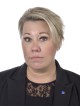 Camilla Brodin (KD)
Mr. Speaker! Today we shall take a position on whether the Riksdag can accept Elisabeth Thand Ringqvist as government-former after she has completed the exploratory assignment she received from the Speaker.
Elisabeth Thand Ringqvist did not take on the task because she herself wanted to become Prime Minister, but rather to explore the possibilities of forming a government based on the primary options that the Center Party had in the election campaign. We Christian Democrats view this vote in light of this and the need to move the process forward. Therefore, we also want to thank Elisabeth Thand Ringqvist for her work during the past period.
In order for the intentions of the constitution to be fulfilled, it is important that we can go to a vote in this chamber on the different alternatives that occur in the political conversation.
In this matter, we Christian Democrats mean that when a government is to be formed, there must be agreement regarding which overall political direction one wants to lead Sweden in. We mean that what is best for Sweden is a government that continues to manage the successes that the blue and yellow parties have won. It is about inflation, nuclear power, the asylum pressure, the buildup of the defense, the support for Ukraine, and not least the deadly gang violence.
But a new government must also set the direction forward. A new government needs to prioritize welfare and a reforming of healthcare, ensure that ordinary families become winners, and have a strategy to build Sweden strong through both development and growth. It also needs to take the fight for our country's values.
A government that we accept is a government that is prepared to realize what we Christian Democrats called the Swedish Dream during the election campaign. The voters have elected a parliament where there is a majority in the chamber for free enterprise, growth, functioning migration policy, reasonable tax levels, good welfare, and a stable energy policy. This should also be seen as a clear signal from the voters that Sweden needs a center-right government. It remains for us to jointly take responsibility so that such a government can take office. Therefore, the Christian Democrats will vote no to the proposal presented today.
In this speech, Lili André, Mathias Bengtsson, Magnus Berntsson, Christian Carlsson, Hans Eklind, Cecilia Engström, Martin Hallander, Johanna Holmdahl, Liza-Maria Norlin, Kjell-Arne Ottosson and Paul Sabo (all KD) agreed.
 Matheus Enholm (SD)
Mr. Speaker! The cake was ordered. The victory congratulations were demanded. The party leaders cheered. Election night and the days following became a demonstration of all the rules of the theatrical arts.
What was claimed before the election to be a serious alternative to our blue and yellow party was nothing more than a facade – a facade intended to hide the total chaos that was unfolding behind the scenes. It was a chaos that was skillfully hidden from the voters by broadcasting a stream of beautiful words and grand plans during the election campaign.
One of several pieces of evidence for this is the fact that today we have to take a stand on a prime ministerial candidate who does not even want to become prime minister. And it is not really that strange; if one thinks completely differently on issues of decisive importance for the country, it requires no great concluding ability to calculate the outcome. If one has four different players in a team where one hits long balls to the left flank, another believes in out-of-touch crosses from above, a third believes that one is the team itself, and a fourth player sits down in the center circle, one does not have a functioning team. If the truth is told, one has no team at all.
Mr. Speaker! The contrast could not be clearer. The blue-yellow block has a common direction of will on issues that are completely decisive for Sweden. The red-green side has differences of opinion and a spread of views when it comes to almost all issues. With that in mind, it is not difficult to calculate which of these two alternatives has the best conditions to create stability and peace of work.
The Sweden Democrats' parliamentary group always has the ambition to be constructive, open, and responsive. We do not draw red lines against other parties. We do not build up unshakeable barriers that block every attempt at constructive action. Instead, we are keen to have a free room for maneuver – a room for maneuver that in every given situation shall be used to push through good policy that puts Sweden's citizens in the foreground. Our starting point is to always, in all situations, do what is best for our country.
This is one of several reasons why the Sverigedemokraternas parliamentary group today votes no to Elisabeth Thand Ringqvist as new Prime Minister.
In this speech, Emma Altenhammar, Bo Broman, Mattias Eriksson Falk, Mikael Eskilandersson, Liselotte Forsberg, Rasmus Giertz, Patrik Jönsson, David Perez, Patrick Reslow, Kevin Sahlin, Oscar Sjöstedt, Victoria Tiblom, Martin Westmont and Eric Westroth (all SD) agreed.
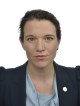 Lina Nordquist (L)
Mr. Speaker! Here we are again. Magdalena Andersson, who proclaimed herself the election winner, has not negotiated a government alternative in the seven weeks since the election. 176 mandates is the most, but apparently only purely mathematically.
The result is that the chamber now needs to vote on an alternative that only Center Party members and a few individuals from the leadership are advocating for, because the actual candidate and the election winner refuses to let themselves be tested by the chamber.
Mr. Speaker! Our country stands as a result of this without a government that can act against the fact that Sweden's teachers and schoolchildren face a rowdy and sometimes threatening everyday life in school. Sweden stands without a government that can prevent families with children from having a financially tough winter this year and without a government with the power of action to strengthen Sweden's security – while war and conflicts rage.
Mr. Speaker! It is obvious that the Chamber today will vote no to Elisabeth Thand Ringqvist as Prime Minister in a Social Democratic government and no to the S-led government that the Center Party has tried to gather support for. Even the Liberals will today, for the second time, press the red button for a red government.
Mr. Speaker! What people in our country need is not S-tax increases and growth brakes, but they need policies for more growth, which creates jobs. There is a need for a policy for research, business, and entrepreneurship and for industrial peace and more knowledge in school, which makes our country more educated and wealthier. There is a need for a policy for more freedom for the people who strive and contribute and for the people in our country who today have the very least freedom.
When we now defeat Elisabeth Thand Ringqvist and the proposal for a Social Democratic government, it is simultaneously the Liberals' hope that this can become the starting point for the ability to act and for the policy we strive for.
If the red-green parties are now, despite everything, not willing to lead Sweden – then let forward a liberal, bourgeois center-right government! Ulf Kristersson is the Liberals' prime ministerial candidate. He and we have for four years shown that we can lead our country. Even when different parties think differently, we can find ways for the country's sake, for people's sake and for the inhabitants' sake.
Together, we are more than willing to continue taking responsibility for the knowledge nation Sweden and for robust welfare and safety nets financed by a free business sector and by all those who set off to work early mornings and late evenings.
Give us a chance, if you do not want to take the chance the voters gave you yourselves!
In this speech, Roger Haddad, Elin Hjelmestam, Martin Melin and Mauricio Rojas (all L) concurred.
 Samuel Gonzalez Westling (V)
Mr. Speaker! Today we take a position on the so-called center government, which Elisabeth Thand Ringqvist and the Center Party have advocated for and explored the possibilities for. Since the Left Party is not part of this government option, we vote no today.
I respect that the Center Party wanted to go to the bottom with the government constellation that they themselves would have preferred. If there had been support for this alternative, the Left Party would have had to accept it and go into opposition. But now it is completely clear that that path is closed, and thus we in the Left Party are prepared to take responsibility and negotiate when the process for Sweden to get a government in place now proceeds.
Vänsterpartiet has been clear throughout the entire process: in the event that our mandates are requested in a government formation, we shall also be part of that government. This alone is not negotiable. We set the requirement for government participation because we want the policy that Vänsterpartiet wants to drive to actually be implemented as well. We are fully aware that it will not be a pleasant existence all the time, but the votes of Vänsterpartiet's voters must weigh just as heavily as others.
Now the Liberals and the Christian Democrats have announced that they do not wish to be part of Magdalena Andersson's government basis. That leaves only the Social Democrats, the Left Party, the Center Party, and the Green Party. We believe therefore that Magdalena Andersson, now that the middle alternative has been rejected, needs to be clear that it is a four-party government consisting of the parties that won the election two months ago that is the way forward.
For us in Vänsterpartiet, it is a government alternative that we advocate very clearly: We envision a government where all parties that make up the government base are also given the opportunity to participate. No one should be able to say no to anyone else whose mandate is needed. Vänsterpartiet is prepared to negotiate constructively and compromise on the content so that a government cooperation between our four parties can function. There, all parties, including Centerpartiet, should be able to feel that they come out well.
The Speaker has announced that the exploratory mandate following today's vote goes to Ulf Kristersson. The Left Party's prime ministerial candidate is Magdalena Andersson, and the exploration that the Moderaterna are to conduct therefore does not include our party. The Speaker has also said that if Ulf Kristersson does not succeed, he wants to know if there are conditions for a government on our side. Then we must be ready.
We are four parties who have pointed out Magdalena Andersson as Prime Minister, and we have together won a majority of the votes. Let us therefore at least make an attempt to form a four-party government led by Magdalena Andersson. It may be difficult, as we do not agree on everything, but if the will is there, I am convinced that it is possible. Therefore, my hope is that there are things that are more important for the Center Party than a no to the Left Party in the government.
All parties must be allowed to make their own choices, but I want to be clear that our door remains open. I believe it is good that we are clear with each other. Elisabeth Thand Ringqvist, we need each other. Today it is clear that it is not possible to have any red lines against each other. We dropped our red lines against you a long time ago. Would it not be good if you dropped yours against us?
Differences exist, we know that, but where there is a will to resolve contradictions, there are also opportunities. Above all, we stand secure in one thing that none of us can compromise on, namely human dignity. It is actually there that the whole thing is decided. We can manage this.
After this vote, it is clear that there are only two realistic alternatives in Sweden's Riksdag: either the Socialdemokraterna, Vänsterpartiet, Centerpartiet and Miljöpartiet, who together can offer hope for a brighter future, or to continue on the path taken to the right where human is pitted against human, which leads to increased divisions, poorer conditions for companies and a shattered welfare state. These are the two choices we have left.
For Vänsterpartiet, the choice is very simple. It is time for a new direction for Sweden. When I stood here last time, I said that we voted no with the hope of soon being able to vote yes. That hope still remains. Today, Vänsterpartiet votes no to a center government that we ourselves are not part of. When Magdalena Andersson has assembled a government that we are part of as an equal party, we will vote yes. Sweden cannot wait much longer.
In this speech, Andrea Andersson Tay, Daniel Bernmar and Jennifer Merelaid Hankins (all V) agreed.
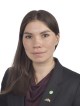 Annika Hirvonen (MP)
Mr. Speaker! There is a red-green majority in the Riksdag. The Swedish people have voted for a new direction, but today the Riksdag is instead voting on a middle-ground alternative that has never been realistic. There is a lack of both a common political project, a shared sense of values, and a will among the parties concerned.
The Green Party has sought and received a strong mandate from the voters for a new direction for Sweden. We have been clear at all times that we want to see a red-green majority government that lowers emissions, strengthens welfare, reduces unemployment, and builds our country back together. We have neither sought nor received a mandate from our voters for a right-leaning cooperation with the Christian Democrats and the Liberals, and their dismissals of us have been at least as clear when the question has come up for discussion.
Miljöpartiet wants to see a red-green majority government with Magdalena Andersson as Prime Minister in which Centerpartiet also participates. We hope to be able to move forward quickly and get that government in place. For these reasons, Miljöpartiet votes no today.
Mr. Speaker! Tomorrow marks ten years since the Paris Agreement entered into force. Time is passing, and emissions continue to increase. It is urgent to transition. We know that the climate transition is absolutely necessary if we are to give our children a secure future.
Just a couple of weeks ago, the UN's environmental program stated that the world is heading towards 2.8 degrees of warming if things continue as they are now. That is far beyond what is sustainable. Despite the seriousness we face, the Tidö government gave us four lost years for the climate. For the first time in 20 years, a Swedish government has actively increased emissions with its policy, even though we are in a situation where emissions needed to decrease faster and faster.
Sweden has become one of the countries that is backing off instead of driving a change. On Monday, the UN's major climate summit, COP 31, begins, where Sweden used to be a country that others listened to. We showed that we were ready to do the work, and in that way, Sweden, despite being a small country, became a strong voice with much influence. It is time to take back that leadership. It is time for a government that takes the climate seriously.
Every day that Sweden waits for a new government, climate emissions continue at the catastrophically high level that is the result of the Tidö parties' policy. For every lost week, it becomes harder to keep up with the systemic changes that are needed.
Mr. Speaker! The voters have given us a mandate, and we shall administer that mandate. After four lost years with Tidö, Sweden needs a new direction. That is what our four parties agree on, and it is what the Swedish people expect.
In this speech, Mohamed Abdukani, Leila Ali Elmi, Janine Alm Ericson, Ajda Asgari, Gurgin Bakircioglu, Marcus Friberg, Camilla Hansén, Daniel Helldén, Rebecka Le Moine, Amanda Lind, Åsa Lindhagen, Hanna Lindqvist, Emma Nohrén, Jan Riise, Jacob Risberg, Nils Seye Larsen, Nila Vikhe Patil and Ulrika Westerlund (all MP) agreed.
Source: The Swedish Parliament. The speeches come from the open data of the Riksdag, translated into English by AI, which may contain errors.
Portraits: Photo: The Swedish Parliament. (opens in a new tab)