The National Audit Office's annual report 2026
The whole debate at riksdagen.se, in Swedish (opens in a new tab)
Translated from Swedish by AI; the translation may contain errors. The Swedish text is the original.
Speakers
National Audit Office 2026 report on state resources AI
The debate concerned the Swedish National Audit Office's annual report 2026 and its role in auditing the state's resources and the functioning of authorities. S argued that the report is a tool to improve public operations and that the government must learn from deficiencies in, among other things, fiscal policy and the Defence Materiel Administration 1. M emphasized the importance of tax money being used effectively and that the state must follow up on results, especially given the deteriorated security situation 2. L highlighted the need for the school authorities' support to be based on a scientific foundation and that the authorities must systematically compile teachers' experiences to avoid students becoming guinea pigs for pedagogical trends 3.
Written by AI in advance and may contain errors. The numbers lead to the speech a statement builds on; check against the text below.
The debate on the Riksdag's web TV (opens in a new tab)
The video, in Swedish, comes from the Riksdag's web TV and loads from riksdagen.se only when you click. The Riksdag may then count the playback in its visitor statistics.
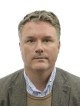 Joakim Sandell (S)
Madam Speaker! The National Audit Office has a central role in our democracy. It is about auditing how the state uses our common resources, how the authorities function, and whether political decisions actually achieve their intended effect.
When the Swedish National Audit Office presents its audits, they are handled in the committees responsible for the respective areas. They are then debated in the chamber, where we as members of Parliament are given the opportunity to discuss the conclusions and hold the government accountable for any deficiencies that have been highlighted.
The annual report that we are dealing with today is therefore somewhat special. In a way, it constitutes a summary of the National Audit Office's work during the year. Much of the content has therefore already been the subject of consideration and debate here in the chamber.
The annual report also gives us the opportunity to lift our gaze and see the larger patterns. Which problems recur? Where does the governance fall short? And perhaps above all: What can we learn in order to be able to improve the state's activities?
Madam Speaker! This year's report contains several important observations that deserve to be taken very seriously. This concerns, for example, the Riksrevisionen's criticism of the government's management of the fiscal framework and the shortcomings that have been highlighted regarding the management of the Defence Materiel Administration.
I do not intend to delve into these issues today but will content myself with stating that they show how important it is with a well-functioning scrutiny of the government's and the authorities' work.
Madam Speaker! The Swedish National Audit Office's audits are not only important for detecting errors; they are also a tool for improving public operations. It is positive that the follow-ups show that the audits lead to actions. But it is also clear that many problems remain despite having been brought to attention.
That is why it is important that the government learns from the Swedish National Audit Office's conclusions and addresses the deficiencies that have been identified. After all, it is not the number of reports, investigations, or government mandates that determines how well the state functions. It is the results.
With this, Madam Speaker, I move for approval of the committee's proposal.
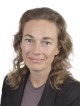 Hanna Netterberg (M)
Madam Speaker! Everyone should have the right to know how the state conducts its work and be able to expect that the public sector delivers. The trust between people and the state is the foundation of a secure society.
Today we are debating the National Audit Office's annual report for 2026 – a report that deserves attention. The National Audit Office has a central role in our democratic system through its independent audits. During the Finance Committee's proceedings, it was particularly emphasized that the report provides good conditions for the Riksdag to discuss the important observations, to demand accountability, to identify deficiencies, and to improve government operations.
For the Moderates, this is fundamental. We politicians have a duty to ensure that every tax krona that comes from people who go to work, run businesses, or in other ways contribute to our common society is used in the best way. Every krona that is used inefficiently is a krona that does not go to more police, better healthcare, or a stronger defense. The state therefore needs to become better at following up on results, clarifying responsibilities, and ensuring that decisions made take effect, because it is only the taxpayers' money that exists – none other.
We see how the global situation poses new demands. The deteriorated security situation in Europe with Russia's fearsome war of aggression against Ukraine, the need for increased readiness and large investments in total defense require strong institutions and a functioning state. I want to emphasize that Sweden's defense capability and the support for Ukraine are absolutely crucial for our security.
Madam Speaker! This year's report shows that significant challenges still remain. The National Audit Office presents criticism regarding a lack of transparency and that the fiscal policy is not being designed in accordance with the current framework. But it is important to point out the difference between the fiscal framework in its entirety and the changes that the government reached a cross-bloc agreement on and which all parliamentary parties have stood behind: New defense expenditures and support for Ukraine shall temporarily be able to be loan-financed.
Madam Speaker! The Moderates view the Swedish National Audit Office's independent auditing work very positively. It is not something that lies aside from politics, but on the contrary. It is a prerequisite for political decisions to function in practice. Ultimately, this is about the citizens. They must be able to trust that the state takes responsibility for their money, for that is how a society is built strong.
With the motion presented, I vote in favor of the committee's proposal.
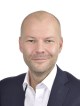 Pär Gustafsson (L)
Madam Speaker! The National Audit Office has a central task in our democracy. By independently auditing how the state's resources are used and how state activities function, the National Audit Office contributes to strengthening both the efficiency and the trust in our common institutions.
The reports that the Swedish National Audit Office presents are important. They give us the opportunity to highlight deficiencies, demand accountability and ensure that political decisions also achieve the intended effect.
I therefore want to take this opportunity to draw the Chamber's attention again – at least our attention here – to one of the audits that the Swedish National Audit Office conducted during the past year. It concerns something as fundamental as whether the support that our school authorities provide to teachers and schools actually rests on a scientific basis.
Madam Speaker! Swedish school has a fundamental mission: to give every child the knowledge they need to be able to shape their future. But today, all too many students leave primary school without sufficient knowledge. One in three 15-year-olds does not reach basic levels in reading comprehension and mathematics. It is a serious failure for the individual student, for Swedish school, and for our society.
For many years, the Education Act has stipulated that all activities and education shall be based on scientific grounds and proven experience. Teaching shall be based on knowledge of what actually works, not on temporary pedagogical trends or personal convictions.
The audit's review shows that the support provided by Skolverket and the Specialpedagogiska skolmyndigheten to the schools is not always developed in a systematic and transparent manner. Furthermore, there is a lack of methods to systematically compile the experience and knowledge that Sweden's teachers possess, which is perhaps the most noticed and remarkable point. This means that the authorities risk recommending ways of working based on subjective assessments and, in the worst case, methods that actually worsen the students' opportunities to learn.
Madam Speaker! For a long time, Swedish school has been the subject of a number of different pedagogical ideas and experiments. All too often, new methods have been introduced without sufficient knowledge of what they actually lead to.
For us Liberals, it is obvious that the school must have a clear focus on its educational mission. This means that the teacher shall be allowed to be a teacher and that the teaching shall be based on research, proven experience and professional skill.
But it also means that the state needs to take a clearer responsibility. The school authorities must be able to report which scientific evidence lies behind their recommendations. Teachers' collective experiences must be taken into account in a systematic way. Methods that do not work should also not be used in Swedish classrooms.
Madam Speaker! There is no contradiction between strengthening teachers' professional freedom and setting high requirements for scientific quality. A teacher who has access to reliable research and well-founded recommendations is given better conditions to make professional decisions in the classroom.
Ultimately, this is about the students. Every student has only one school career. They should not have to be guinea pigs for pedagogical ideas that lack scientific support. Therefore, our school authorities need to live up to the requirements that we rightly place on Sweden's teachers.
This is one of many important conclusions that the Swedish National Audit Office's audits have given us during the year. It is a task that deserves both our attention and our appreciation.
With that, Madam Speaker, I thank you for the floor and move for approval of the committee's proposal.
The deliberation was hereby concluded.
Source: The Swedish Parliament. The speeches come from the open data of the Riksdag, translated into English by AI, which may contain errors.
Portraits: Photo: The Swedish Parliament. (opens in a new tab)