Amendment to the state budget for 2026 - Authorization for economic commitments for computing power
The whole debate at riksdagen.se, in Swedish (opens in a new tab)
Translated from Swedish by AI; the translation may contain errors. The Swedish text is the original.
Speakers: Eva Lindh (S), Ida Drougge (M)
Summary AI
S wants to increase Sweden's commitments to secure access to advanced computing power for research, companies, and welfare 1. S believes that investments in infrastructure reduce dependence on other parts of the world and strengthen Europe's independence 1. S criticizes, however, the government's lack of preparatory work before the decision 1. M calls for approval of the extra supplementary budget to be able to procure computing power together with the EU Commission and Finland 2. M argues that Swedish-owned computing power is necessary to maintain security, simulate weather, and detect cyberattacks against the welfare system 2.
Written by AI in advance and may contain errors. The numbers lead to the speech a statement builds on; check against the text below.
The debate on the Riksdag's web TV (opens in a new tab)
The video, in Swedish, comes from the Riksdag's web TV and loads from riksdagen.se only when you click. The Riksdag may then count the playback in its visitor statistics.
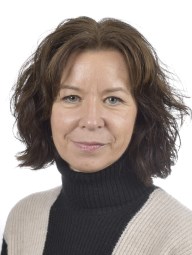 Eva Lindh (S)
Madam Speaker! We Social Democrats support Sweden increasing its commitments to secure access to advanced computing power. It is important for Swedish research, for our companies, and for the opportunity to develop a modern and efficient public sector.
AI is already changing our economy and our society. It can contribute to new medicines, faster research, smarter industrial production and better public services. It can help companies develop new products, streamline their operations and create jobs. Within welfare, AI can contribute to freeing up time for staff, so that more time can be devoted to people. At the same time, we must of course also protect ourselves and regulate the negative consequences of AI.
However, to be able to develop and use AI, computing power is required. It is a strategic resource, and access to it affects which countries can lead the development. This proposal is about ensuring that we in Sweden can have computing capacity for research, for innovation, for the public sector, and for the business sector.
Those who have access to computing power also have better conditions to develop the new technology. Sweden and Europe therefore need to invest in this infrastructure and reduce our dependence on other parts of the world.
Through Euro HPC, we can, together with other European countries, strengthen our capacity and create better conditions for research and innovation. Enabling AI gigafactories in Europe is an initiative that we believe Sweden should be a part of.
It is about Europe's independence. Today, a large part of the world's AI capacity is concentrated in the USA and China. Through European cooperation, we can strengthen our competitiveness, reduce vulnerability, and gain greater opportunities to ourselves influence how the technology is developed and used. Euro HPC is an important step in that direction.
That is why we Social Democrats say yes to Sweden being able to make these commitments. We see the value of investing in future research, innovation, and competitiveness. But we also see that technological development must benefit the entire society. AI should create profits for individual companies but also contribute to higher productivity, more jobs, and a welfare system that works better for people.
Madam Speaker! It is nevertheless remarkable how the government has handled the issue. The government has had the responsibility to prepare the matter and create the conditions for a well-founded decision. But the issue has now come to the Riksdag without the government having done the preparatory work that would have been needed.
Now the Riksdag must take responsibility for enabling a commitment that is strategically important for Sweden. But the government's lack of handling must not stand in the way of Sweden's opportunities. We must be able to hold two thoughts in our heads at the same time and despite that now take responsibility for Sweden's future.
That is why we Social Democrats vote yes to Sweden being able to make these commitments. We do it for Swedish research, for our companies, for the welfare, and for Sweden's competitiveness, so that Sweden and Europe will stand stronger in the global AI development.
· The speech at riksdagen.se, in Swedish (opens in a new tab)
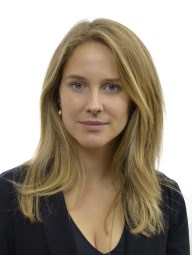 Ida Drougge (M)
Madam Speaker! I would like to begin by moving to approve the committee's proposal for an extra supplementary budget.
Normally, we should not have to make decisions on extra supplementary budgets at all. We try to be restrictive with that. In recent years, with the pandemic and the war in Ukraine, this has however increased. We are not going to get away from that. But despite that increase, it is unusual that we submit extra supplementary budgets and have a need to do so so close to a regular budget process.
In this case, it is based on the fact that we need to adhere to a deadline. The proposal we are handling is about us being able to procure computing power together with others: with the EU Commission and, above all, with Finland. In that case, we need to adhere to the deadlines that exist. It would therefore not have been possible to wait for the regular budget process.
Our ability to manage and process information is becoming even more important, and the potential in this is growing enormously. Not having computing power owned by Swedish and European companies and not having servers and data centers in Sweden and Finland would, for the Swedish part, make it very difficult for the public sector, our authorities, and those who handle sensitive information and personal data to benefit from the technological developments that the private sector can utilize and that our neighboring countries and the rest of the world utilize. Sweden would fall behind.
It would indeed deteriorate, and we would not be able to take advantage of the opportunities that exist within the welfare system. We would also not be able to maintain security.
Having data centers and computing power is about AI, but it is far from only about AI. In Sweden, we have had these needs for a long time. We use computing power to be able to simulate weather and to know how our satellites move and how galaxies move. We test drugs in computers before we test them on humans, to see how molecules react with each other at a chemical level.
There are, therefore, an infinite number of situations where we already use computing power today. What is happening now is precisely that there are many more additional situations where we need to do so. It is also about being able to prevent cyberattacks and detect if individuals, organized crime, or other powers are trying to exploit our welfare system. It could involve pension payments and benefit payments. It is about our ability to counter it – to detect and prevent it.
We mean that this is absolutely necessary, and to enable this, one cannot simply rely on data halls and server halls owned by other countries or companies that have their seats in other countries. Therefore, we move for approval of the extra amendment budget.
The deliberation was hereby concluded.
(Decisions were made under § 11.)
· The speech at riksdagen.se, in Swedish (opens in a new tab)
Source: The Swedish Parliament. The speeches come from the open data of the Riksdag, translated into English by AI, which may contain errors.
Portraits: Photo: The Swedish Parliament. (opens in a new tab)